
Last updated November 21, 2026
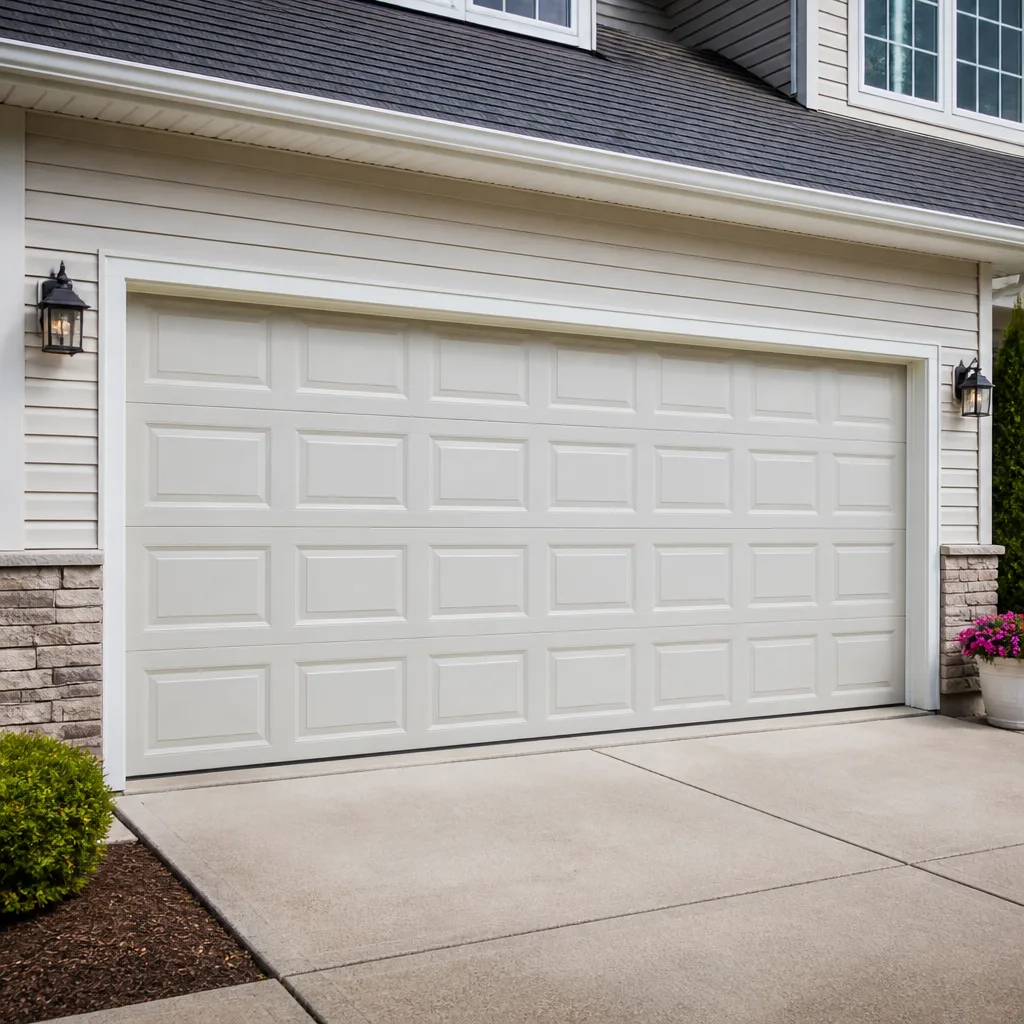 Raised-panel steel
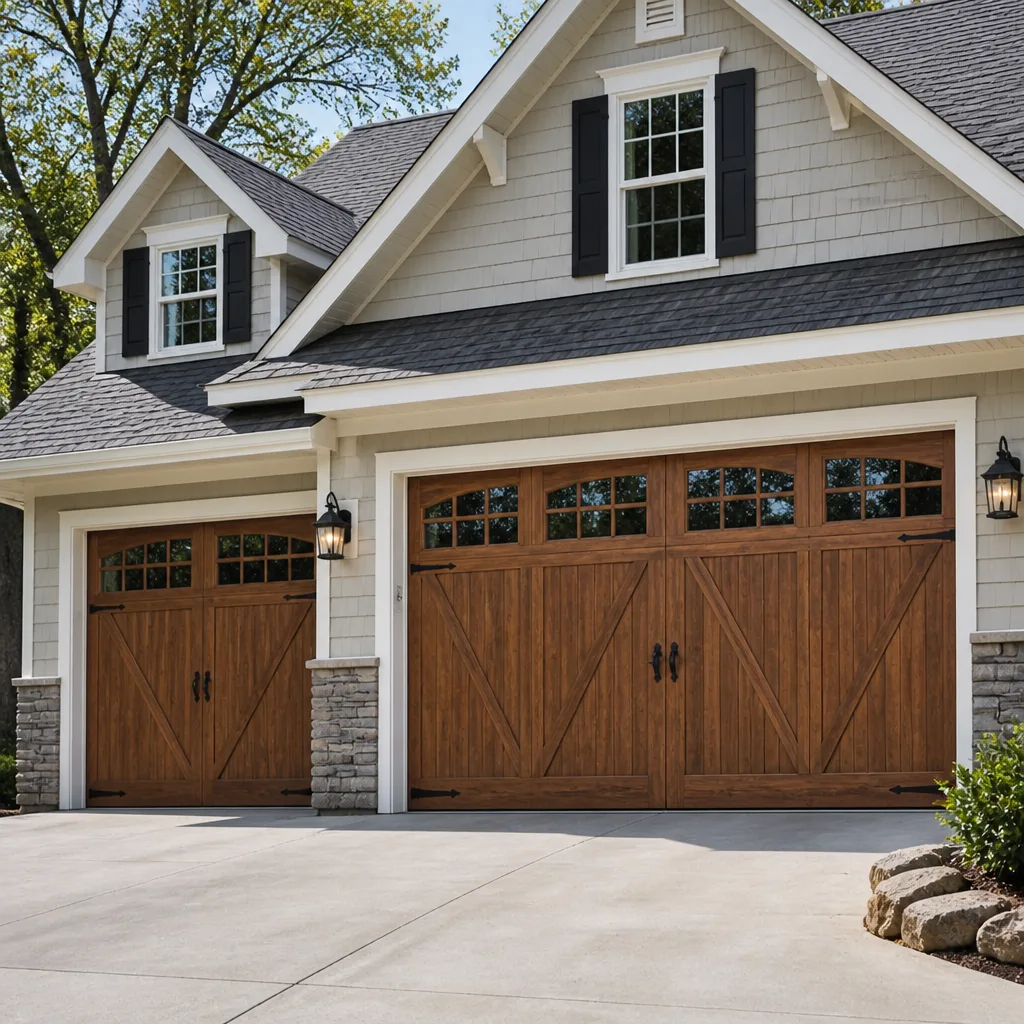 Carriage house
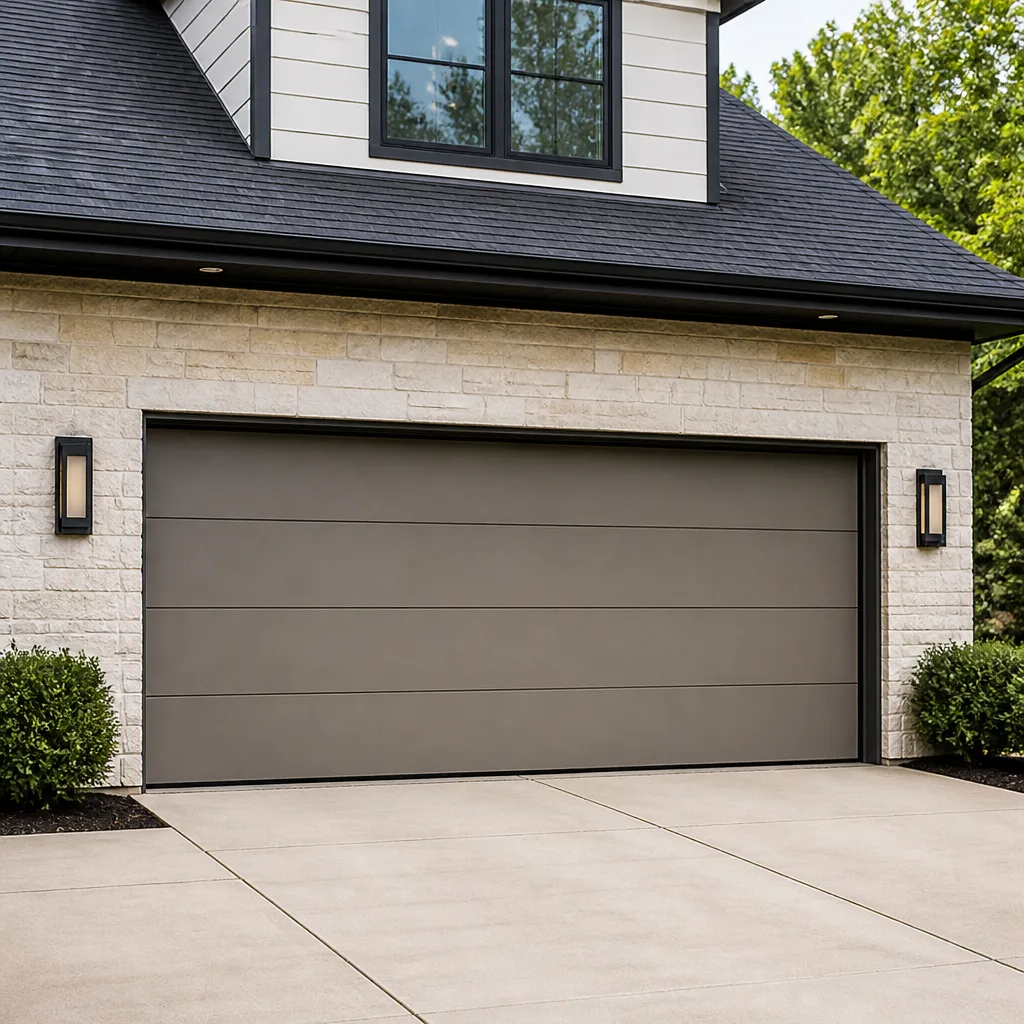 Modern flush
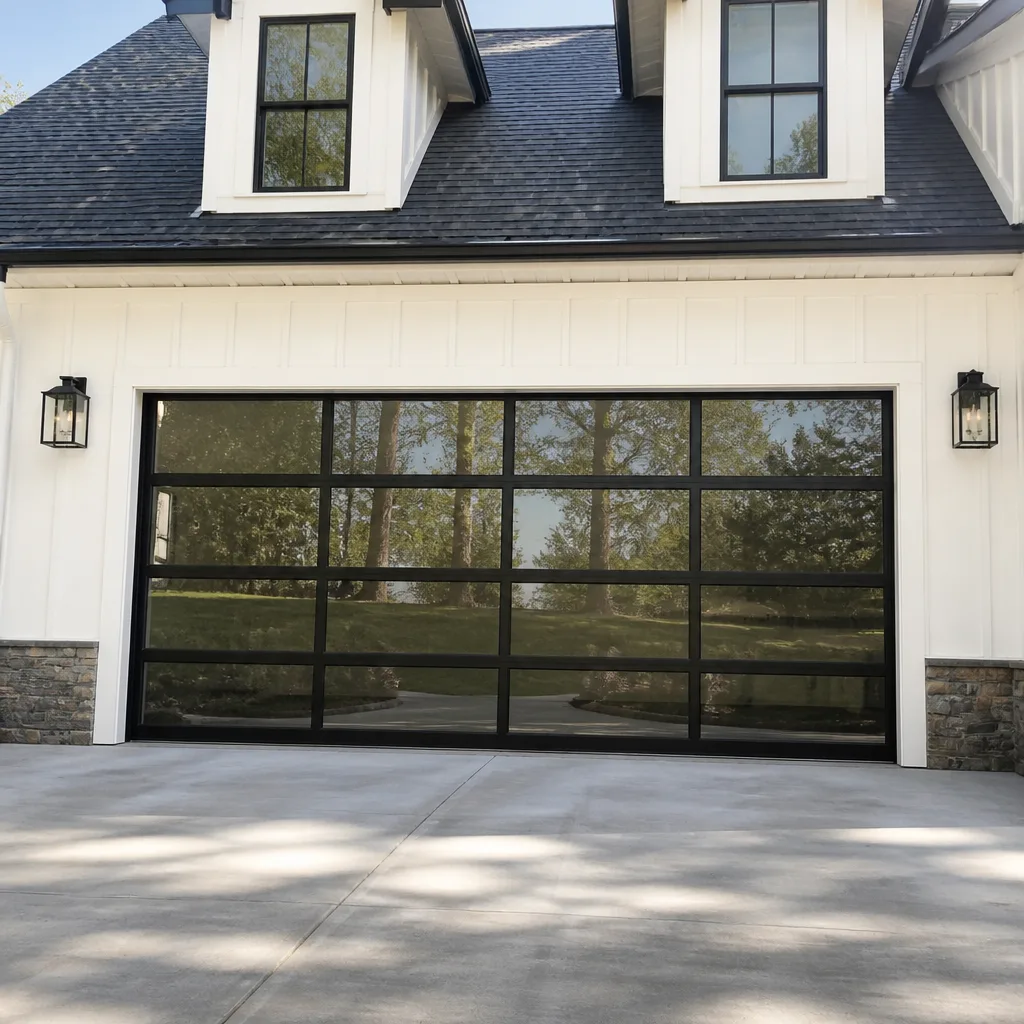 Full-view glass
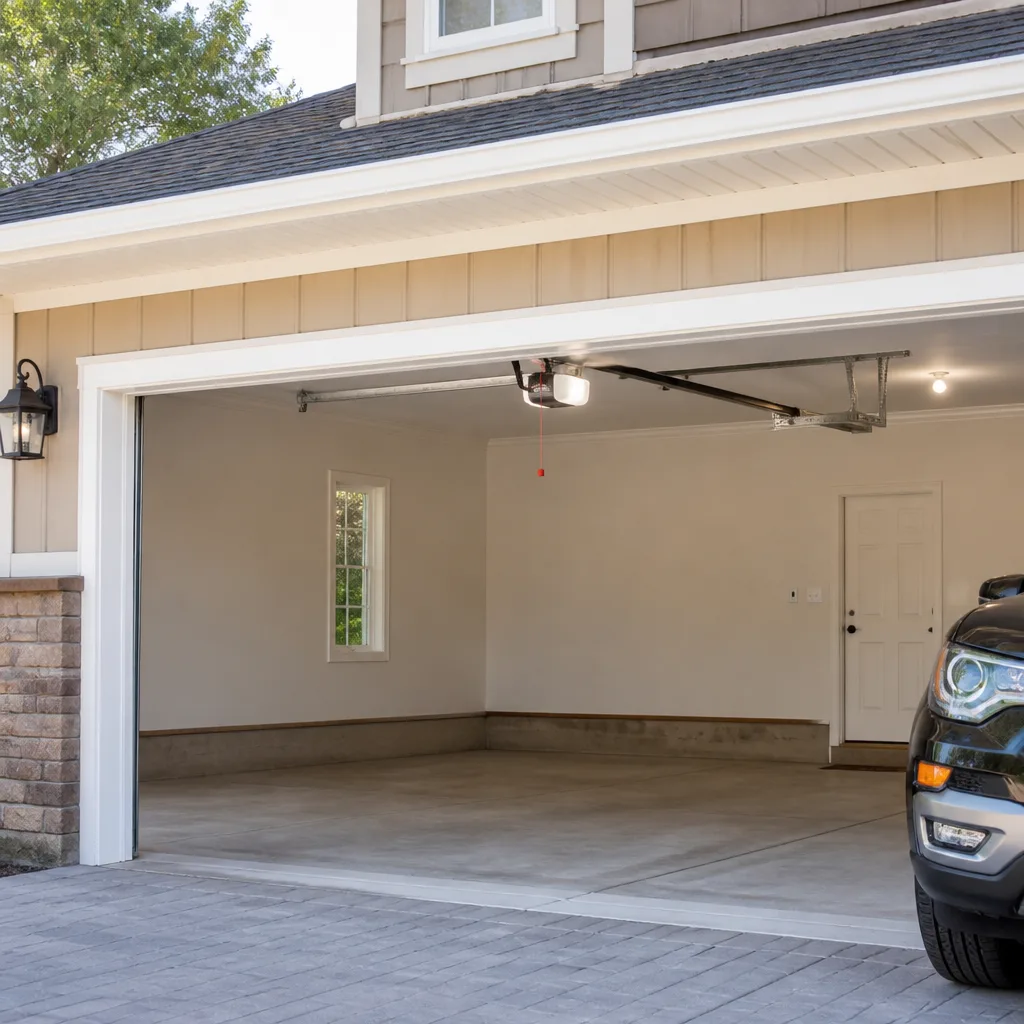 LiftMaster openers
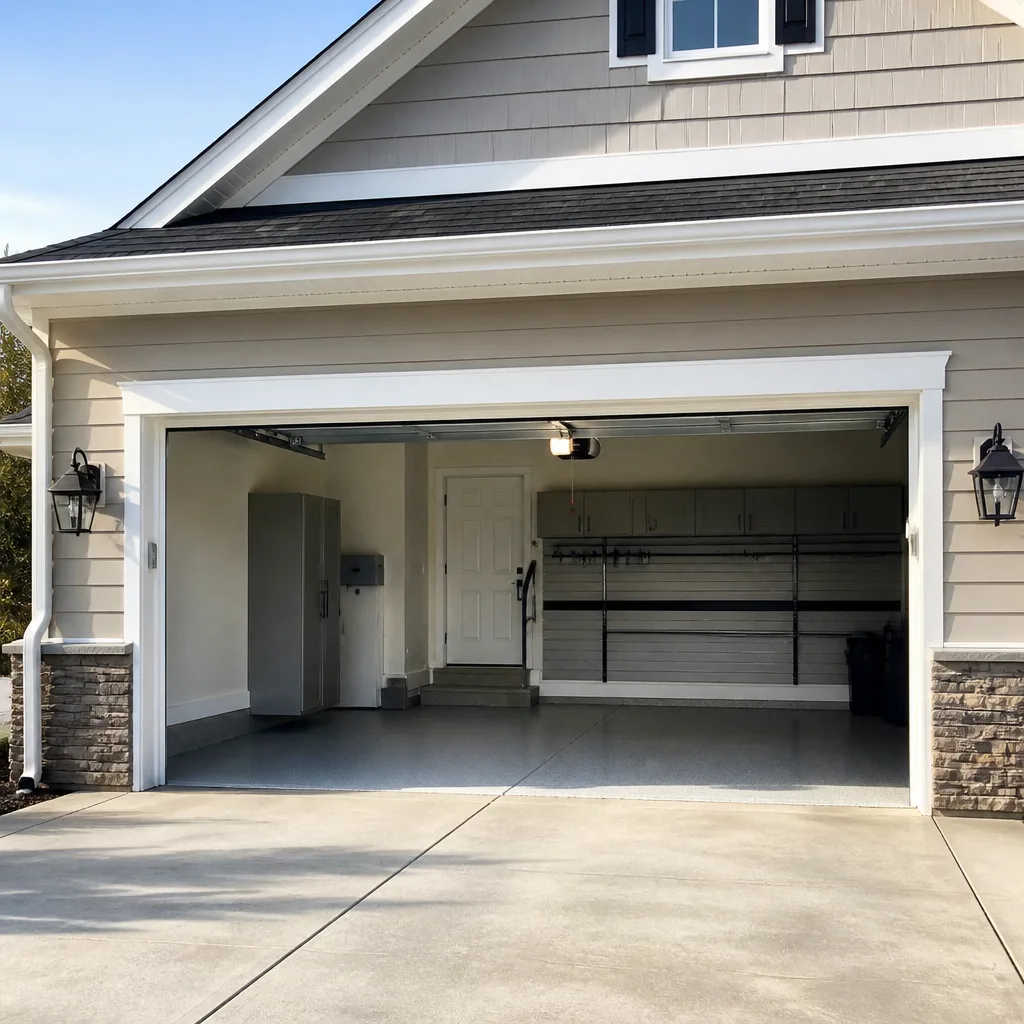 Chamberlain openers
Full 25-point door and opener safety check with every visit - springs, cables, rollers, tracks, and your LiftMaster or Chamberlain opener included
You get a price before we start. It does not change when the pro arrives.
Get your free estimateDIY vs Professional Garage Door: The The Heights Homeowner’s Decision Guide
Torsion springs store enough energy to cause a serious injury in a fraction of a second. That’s not a scare tactic – it’s physics. But most of the garage door tasks filling up YouTube are nowhere near that dangerous, and paying a technician to lubricate your hinges is a waste of money. The real question isn’t whether you’re handy enough for DIY. It’s whether you can tell the difference between a task that’s genuinely safe and one that can maim you. This guide draws that line clearly for The Heights homeowners, task by task, so you stop paying for things you can do yourself and stop attempting things that send people to the ER.
Quick Answer
Homeowners can safely handle routine maintenance like lubrication, photo-eye alignment, and limit adjustments on their own. Torsion spring replacement, cable replacement, and track realignment should always go to a trained garage door technician. The dividing line is stored mechanical energy: anything holding a door’s weight or under tension is professional territory. Everything else is yours to manage.
Styles & brands we work with
- Raised-panel steel
- Carriage house
- Modern flush
- Full-view glass
- LiftMaster openers
- Chamberlain openers
Table of Contents
- The Task-by-Task Breakdown
- The Anatomy of a Torsion Spring System
- When a Quick Fix Accelerates Damage
- The Honest Cost Comparison
- Finding Credible DIY Resources
- Brand-Specific Guidance That Matters
- Safety Basics Every Homeowner Should Know
- A Maintenance Schedule for The Heights Homes
The Task-by-Task Breakdown
Most garage door advice online treats every job the same way: either “call a pro” or “you’ve got this.” Both extremes are wrong. Here’s how we split it up after years of seeing what homeowners handle well and what ends up making things worse.
Homeowner-Safe Tasks
- Lubrication. Hinges, rollers, and the opener rail need lubrication to run quietly. A can of garage door lubricant and ten minutes will do more for your door’s lifespan than any other single task. Keep it off the tracks – grease attracts grit.
- Photo-eye alignment. If your door won’t close and the opener light is blinking, a misaligned photo-eye is often the culprit. The eyes should be mounted at the same height and pointed at each other. Adjust the bracket, not the wiring.
- Limit adjustments. If your door stops short of the floor or reverses too early, the travel limits on the opener motor housing are user-adjustable. Every opener brand has its own procedure – check the manual, not a generic video.
- Weather seal replacement. The rubber strip at the bottom of the door protects against drafts and rain. It slides out and slides in. Nothing mechanical about it.
- Cleaning the tracks. A damp rag and a stiff brush clear debris. Leave the alignment alone if the door runs smoothly.
- Replacing the opener remote battery. Self-explanatory, but worth including because it’s the single most common “my door is broken” call we get that turns out to be a dead battery.
Professional-Only Tasks
- Torsion spring replacement. This is the one that kills people. A standard torsion spring on a The Heights home can be under hundreds of pounds of tension even when the door is down. You cannot see it. You cannot feel it. You cannot safely improvise with the wrong tools.
- Extension spring replacement. Less dangerous than torsion but still under significant tension. These springs stretch along the track and snap with force.
- Cable replacement. Cables are what connect the door’s weight to the spring system. A snapped or frayed cable means the door is held up by the spring and the tracks only – a fail point you do not want to test.
- Track realignment. A door that hits the track and stops, or pops out of the roller guides, has a bent or shifted track. This looks simple. The wrong adjustment can drop the door.
- Panel replacement. Individual panels can be swapped, but the process requires unweighting the door and handling the spring tension first.
- Opener motor or gear replacement. Openers are low-voltage, but the motor drives a spring system and the rail assembly has to be re-tensioned correctly.
If you remember nothing else from this guide, remember this: the line is stored mechanical energy. If a task touches anything holding tension, it’s not yours to attempt.
The Anatomy of a Torsion Spring System
You can’t make a smart decision about spring work unless you understand what’s actually inside the system. Here’s how it works, in plain terms.
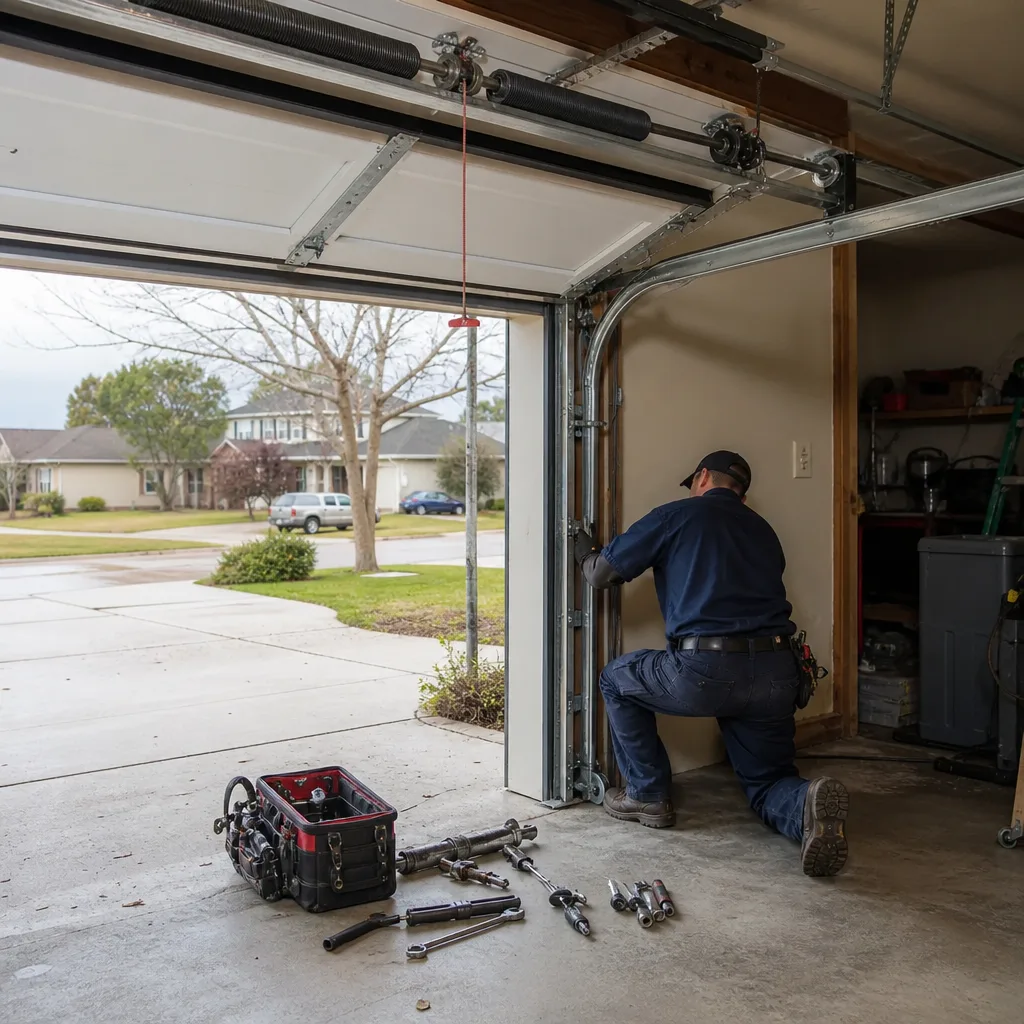
A torsion spring is a coil of steel mounted horizontally on a bar above the center of the door. One end is anchored to the center bearing plate, and the other is anchored to a winding cone on the end of the bar. The spring has been wound past its relaxed length and is holding stored energy in that coil. Two cables run from the bottom corners of the door up along the sides, over the drum at each end of the torsion bar, and terminate at the spring system. The spring is what lifts the door’s weight, not the opener. The opener just helps push and pull.
When a spring breaks, the stored energy releases instantly. There’s a bang like a gunshot, and the door becomes dangerously heavy – up to several hundred pounds – held up only by the tracks and whatever cable hasn’t snapped yet. Attempting to open a door with a broken spring will bend tracks, snap cables, or drop the door.
Winding a new torsion spring requires two winding bars, correct diameter and wire gauge, and the right number of turns for your door’s exact weight and drum size. If any of those are wrong, the door runs poorly or the spring fails again. If they’re dangerously wrong, the winding bar slips out of the cone mid-wind. That’s what sends people to the emergency room.
The good news: our technicians handle spring repairs every day, safely, with the correct components for your door’s specific weight and size. We work on Genie, Clopay, Amarr, and Wayne Dalton systems regularly, and the process is identical in shape and specific in detail on every door. This is not a task where “close enough” works.
If your door won’t open and you suspect a spring, don’t test it. Call (855) 784-2291. We answer 24/7. Fast dispatch from 7am to 7pm, Sunday through Friday, and the price is quoted before any work starts.
When a Quick Fix Accelerates Damage
Some DIY repairs don’t just fail. They turn a same-day fix into a two-day fix, or turn a $250 job into a $700 job. Here are the three we see most often in The Heights – and why each one costs more in the end.
- Forcing a door that’s off track back onto the guide. It looks like it should just pop back in. When you force it, you bend the vertical track, twist the roller bracket, or crack the hinge anchor. The real fix was a track realignment, which is straightforward. Now it’s track realignment plus a track replacement or hinge replacement.
- Replacing a spring without matching the door’s weight. Springs are rated by wire size, inside diameter, and length. A mismatched spring may lift the door for a month, then fail because it’s been running under the wrong tension. The failure can strip the opener gear or snap a cable as a side effect. What started as a spring repair now includes opener repair – a much bigger job. This is why we ask for the door’s make, model, and weight before quoting, and why our parts supply exists at all.
- Adjusting the opener’s force limits to “make the door work.” When a door is binding in the track or has a weakening spring, the opener may stall. Turning up the force limit forces it through the bind. Now the opener is straining against a mechanical problem that hasn’t been fixed. The motor burns out, the gear strips, and you’re buying a new opener for a problem that started as an alignment issue.
Each of these is a symptom fix that becomes a second problem. The technicians at Garage Door Repair The Heights unwind these before starting the real work more often than you’d expect, and the honest answer to all three is: find the cause first. If you’re not sure what the cause is, that’s the moment to call.
The Honest Cost Comparison
DIY saves money when the task is genuinely in your wheelhouse, and costs money when it isn’t. Let’s talk about both sides without spin.
What You Actually Save Doing It Yourself
- Lubrication: about $10 for a can of garage door lubricant. Once or twice a year. Saves nothing versus paying a technician, because you should never pay a technician for this.
- Photo-eye adjustment: a screwdriver and ten minutes. Nobody should be paying for this.
- Limit adjustment: check the manual, follow the procedure, save the service-call price entirely.
- Weather seal: $20-40 for the strip depending on door width. Slides in. Easy.
- Remote battery: $3 at the drugstore. If your door won’t respond to the remote and the wall button works fine, start here before you call anyone.
What DIY Costs When It Goes Wrong
The trouble with the DIY-vs-pro cost comparison is that most articles only count the “success” case. The real math is: what does this cost if I get it right, and what does it cost if I get it wrong?
- Torsion spring work: the injury risk alone ends the math. A wound or broken wrist from a slipped winding bar can end in the emergency room and a month of lost work. There’s no dollar amount that justifies that risk on a task that a professional handles safely.
- Mismatched spring: the wrong spring fails, sometimes by snapping and taking a cable with it. Add the cable repair, the potential opener damage, and the original repair still needs to happen. You’ve paid twice.
- Forced track: a bent track means the door may not close flush, which leaves a gap at the bottom of the door. That’s a security issue and a weather issue, both of which need professional repair anyway.
- Force-limit adjustment: the burned-out opener is the most expensive “I fixed it myself” call we see. Opener replacement runs more than the track inspection that would have caught the problem.
Our typical spring replacement in The Heights runs $180-$340 for a single torsion spring, and roughly twice that for a matched pair. If the door has two springs and one has broken, the second is usually near the end of its life. Replacing both together is often the smarter call. The written estimate sets the final price, and the price is agreed before any work starts.
A free estimate costs you nothing. Call (855) 784-2291. We answer 24/7. Fast dispatch from 7am to 7pm, Sunday through Friday.
Finding Credible DIY Resources
YouTube is not one thing. Some garage door content is filmed by working technicians who explain the why as well as the how. Some of it is filmed by homeowners who got lucky on a task they shouldn’t have attempted. The difference matters.
Here’s how we’d sort it if we were advising a friend:
- Start with your door’s manual, not a video. Every opener brand publishes the limit adjustment, force adjustment, and remote programming procedures in the manual. If you don’t have the paper copy, search the brand name and model number. That is the primary source. Every other resource, including this one, is secondary.
- Cross-check the DIY video against the manual. If the video disagrees with the manual on the procedural steps, the manual wins. Some videos are for the wrong model, the wrong generation, or the wrong opener family entirely.
- Look for the manufacturer’s channel, not a random aggregator. LiftMaster, Chamberlain, Genie, Clopay, and Amarr all publish official setup and maintenance content for their own products. A video from the manufacturer will match your hardware; a video from an unfamiliar channel may not.
- Skip any video that begins with “this is easy.” Maintenance tasks are easy. Anything requiring a winding bar, cable tension, or track movement isn’t maintenance. Watch it for understanding, not for execution.
- When in doubt, verify with a call. We’re happy to tell you whether a task you’re planning is one we’d recommend for a homeowner. If the answer is “yes, that’s fine” we’ll say so, and if the answer is “don’t,” we’ll tell you why.
This is the same logic we use internally. When our technicians encounter a door family they haven’t seen that week, they check the door’s spec plate and the opener’s model number before starting. If your door is a Wayne Dalton or an Amarr, that spec matters because drum sizes and spring gauges differ between manufacturers. Every door we work on gets the same check, which is one benefit of working with technicians who work on garage doors exclusively – the same diagnostic routine on every brand, every visit.
Brand-Specific Guidance That Matters
The most common DIY failure in The Heights isn’t a task done badly. It’s a task done correctly for the wrong brand.
Here’s what we mean. Limit adjustment on a Genie opener and limit adjustment on a LiftMaster opener use different procedures. Remote programming is different between Chamberlain and Craftsman. On the door side, Clopay and Wayne Dalton panels are shaped differently and mount their hinges differently, which changes how you access the roller assembly. Pulling a generic tutorial and applying it to your door is like reading a recipe for a dish and making it with different ingredients – the shape is right, the result is off.
What this means for a homeowner:
- Confirm your opener’s exact brand and model number before starting any adjustment. The plate is usually on the motor housing.
- Confirm your door’s make – Clopay and Amarr are the two we see most in The Heights homes, along with Wayne Dalton and a handful of Raynor installations. A door’s hinge style and panel weight affect what you can safely do to it.
- Keep the manual for whatever you install. Garage doors are the one home component where the original documentation genuinely matters and is routinely thrown away.
Our technicians work on the eight brands most common on The Heights homes every day. LiftMaster, Chamberlain, Genie, Clopay, Amarr, Wayne Dalton, Craftsman, and Raynor – that covers basically any door or opener a homeowner is likely to have. When you call with a symptom, we can usually tell you what’s wrong before anyone arrives. That saves you time and saves you the diagnostic back-and-forth that a generalist contractor has to run from scratch.
Safety Basics Every Homeowner Should Know
A few safety rules apply no matter what task you’re doing. None of these replace calling a trained technician for tension work, but they prevent a lot of unnecessary trouble.
First, never put a hand or finger between the door panels or in the track when the door is moving. The bottom bracket and the hinges fold. Photo-eyes protect against the door closing on a person or object, but they don’t protect against pinched fingers.
Second, if the door is up and one of the two torsion springs is visibly broken – a visible gap in the coil – do not lift the door manually to inspect it. The other spring is carrying the entire weight. Park the car outside, keep the door down, and call.
Third, test the door’s balance once a year: disconnect the opener, lift the door to waist height by hand, and let go. A balanced door stays roughly in place. A door that drops or rises on its own is telling you the springs or cables are out of adjustment. Do not test this if the door is currently broken or visibly damaged.
Fourth, if you have children in the home, confirm the wall button is out of reach and that the photo-eyes are working correctly. Newer openers also include a safety reverse mechanism that’s tested by placing a small object – a 2×4 works – under the door and checking that it reverses. This is a routine check, not a repair.
And the fifth: if a task requires you to be under a raised door to inspect the spring, the cable, or the track, it doesn’t matter how experienced you are. The door’s weight is above you. Those tasks belong to a trained garage door technician. Full stop.
A Maintenance Schedule for The Heights Homes
The Heights is a mild-winter climate, which means your garage door faces steady heat in summer, steady humidity most of the year, and no freeze-thaw cycle to break things down faster than normal. That’s good news – mild-climate doors hold up better than their cold-climate cousins. But “mild” doesn’t mean “maintenance-free.”
Monthly
- Visual inspection: any new damage to the door panels, any daylight visible at the bottom corners, any track that looks bowed or loose.
- Photo-eye test: block the eye with a hand and confirm the door won’t close.
Twice a Year
- Lubricate hinges, rollers, and the opener rail. Keep grease off the tracks.
- Wipe the tracks down with a damp rag to clear grit.
Once a Year
- Balance test (opener disconnected, door at waist height).
- Inspect the cable ends for fraying or snap. Do not touch the tension side, only the visible cable above the door.
- Check the weather seal for cracking or compression. Replace if the door is showing daylight underneath.
- Examine the spring coils visually for gap or rust. A broken spring is usually obvious: visible gap in the coil, door suddenly too heavy to lift.
Every Time the Door Feels Different
Garage doors are mechanical systems. When something changes, it’s usually telling you something. A door that suddenly started making a new noise, grinding at one end, hanging on the way up, or stopping short on the way down is running against a change you haven’t seen yet. The earlier you catch that change, the less it costs to fix. The tradeoff between “wait and see” and “get it inspected” almost always favors inspection, because that’s when the problem is smallest.
If your door’s behavior has changed and you can’t identify which task it is, call us. We’ll help you sort maintenance you can do yourself from a symptom that needs a professional look. Call (855) 784-2291. We answer 24/7. Fast dispatch from 7am to 7pm, Sunday through Friday. The price is quoted before any work starts, and the written estimate is what you pay.
Common Mistakes to Avoid
- Using WD-40 on the tracks. It’s a water-displacer, not a lubricant for door hardware. It attracts grit and gums up the rollers over time. Use a proper garage door lubricant and leave the tracks dry.
- Adjusting force limits to fix a binding door. The door isn’t binding because the opener’s force is too low. It’s binding because there’s a mechanical problem. Increasing force masks the symptom and burns out the opener. In The Heights’ humid months, a slightly swollen wood door can bind – and that’s a spring or track issue, not an opener-programming issue.
- Replacing one spring when the other is equally old. Torsion springs often have a shared service life. If one just broke, the other isn’t far behind. Replace both together and you won’t be calling the same company back in three months.
- Ignoring a small dent in a track. A small dent in a The Heights door’s track – often from a bicycle, a lawn tool, or a bumped car – quickly becomes a roller that can’t pass. The door pops out of the guide, the opener strains, and the cheap fix becomes expensive. Have dents inspected early.
- Trusting a “one-size” tutorial for your brand. Clopay door panels hinge differently from Wayne Dalton’s. Genie openers use different limit procedures than LiftMaster. Pulling a generic video is how homeowners end up with a working procedure on the wrong door family.
- Testing a broken spring by lifting the door. If a spring has snapped, the door’s weight is unloaded onto the tracks and cable. Lifting it manually can drop the door or snap a cable. Don’t test it. Call.
- Paying a technician for lubrication-only service calls. Maintenance tasks are inexpensive to do yourself and don’t require a professional. If your only problem is a squeaky hinge, you’re better off buying a can of lubricant and handling it in ten minutes. Save the professional call for the tasks that need one.
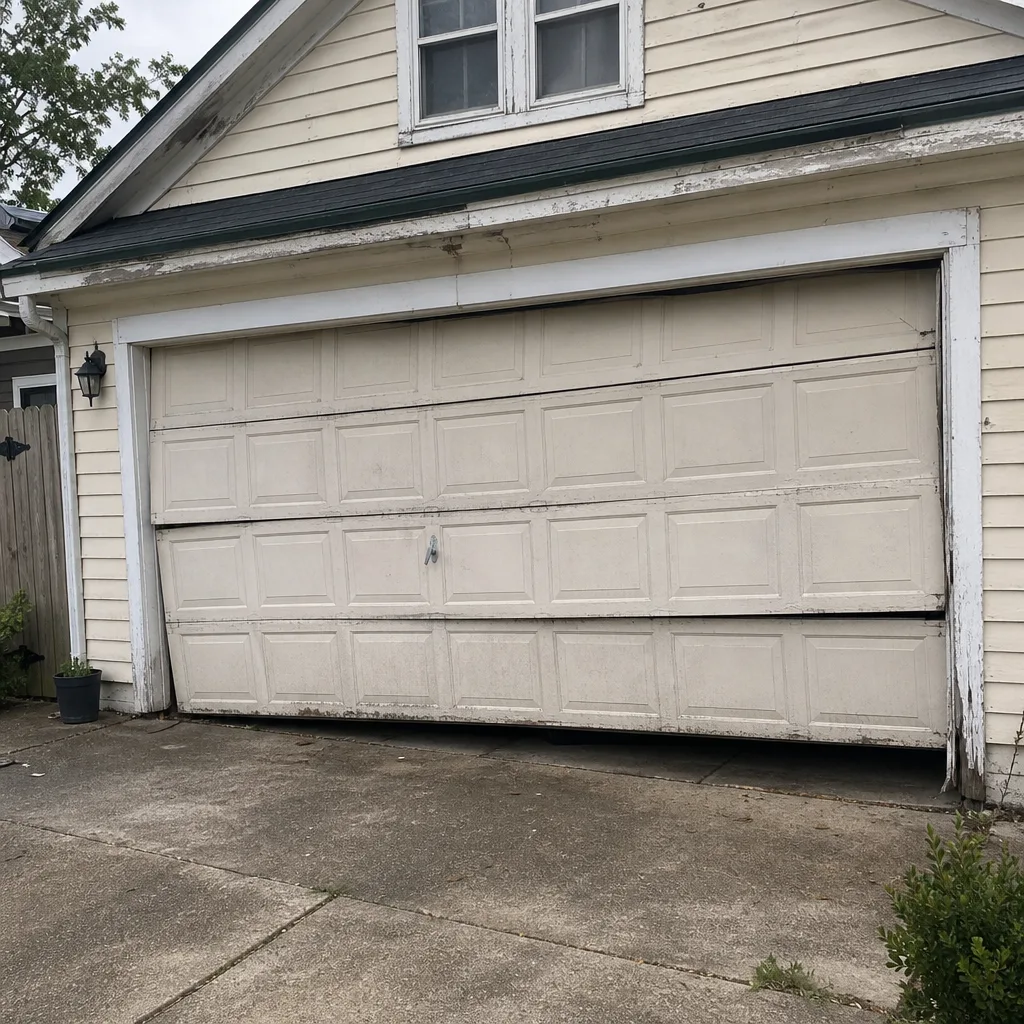
See the difference
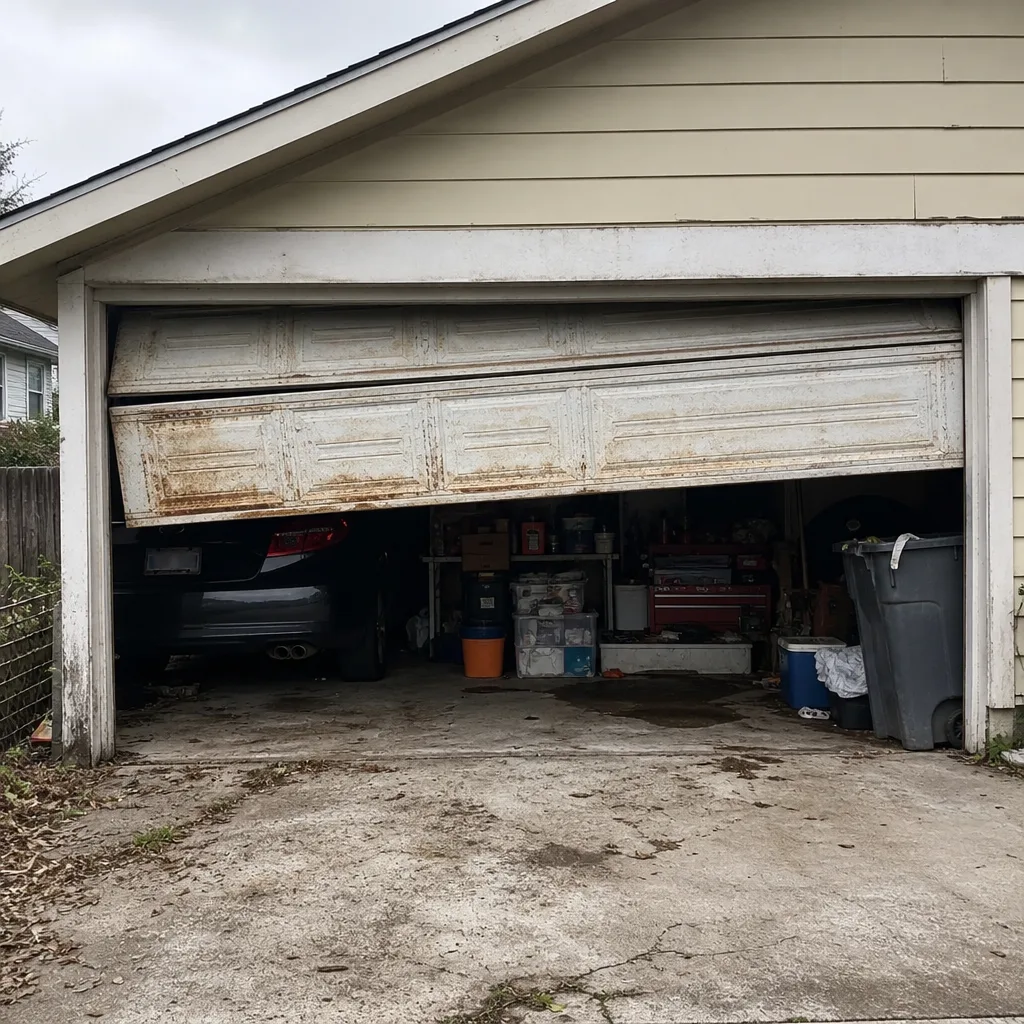 Before
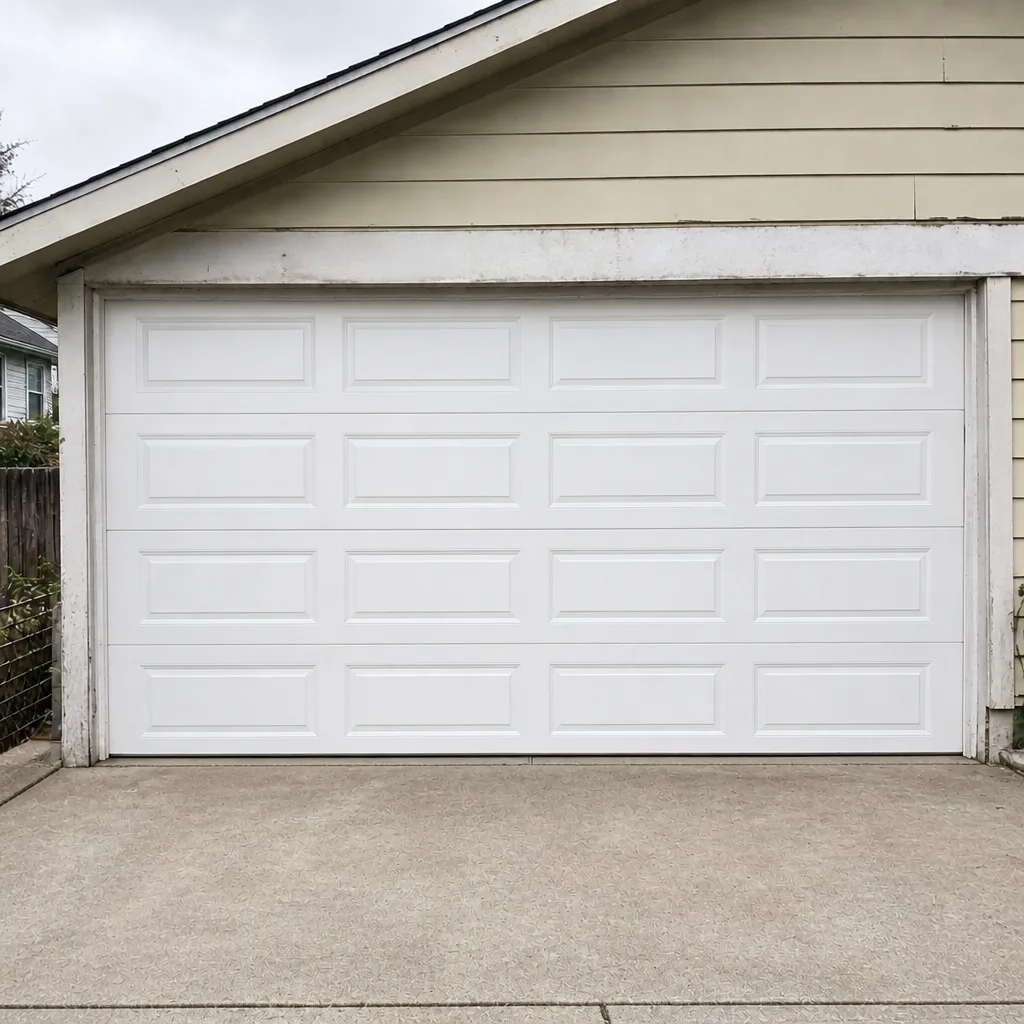 After
 Before
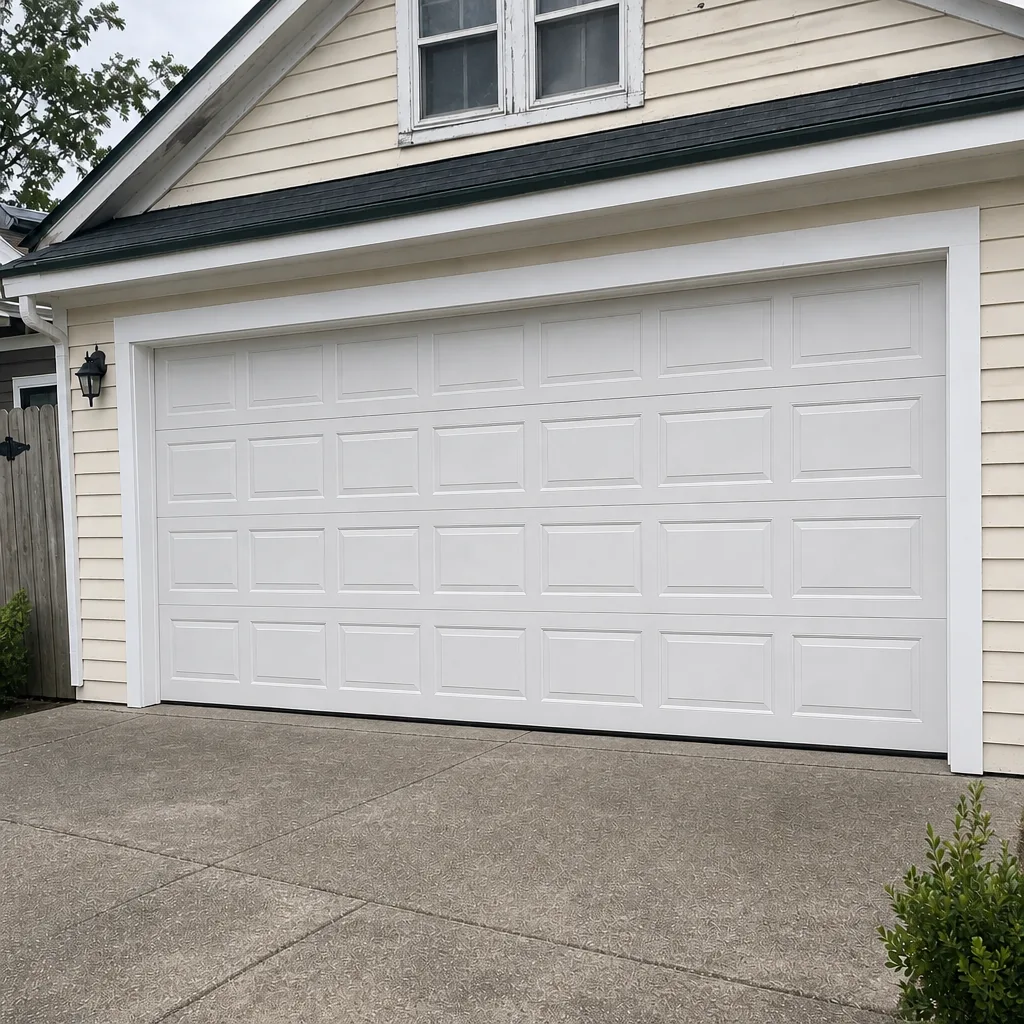 After
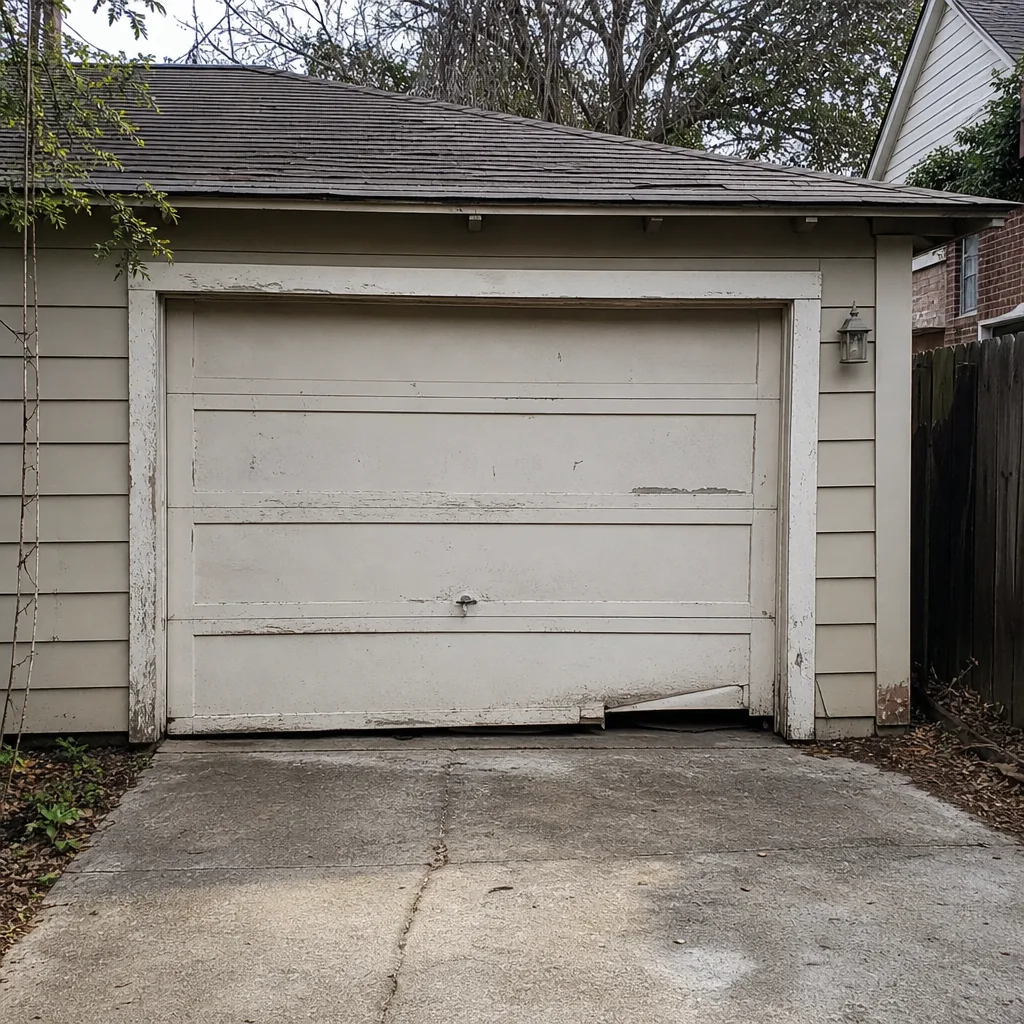 Before
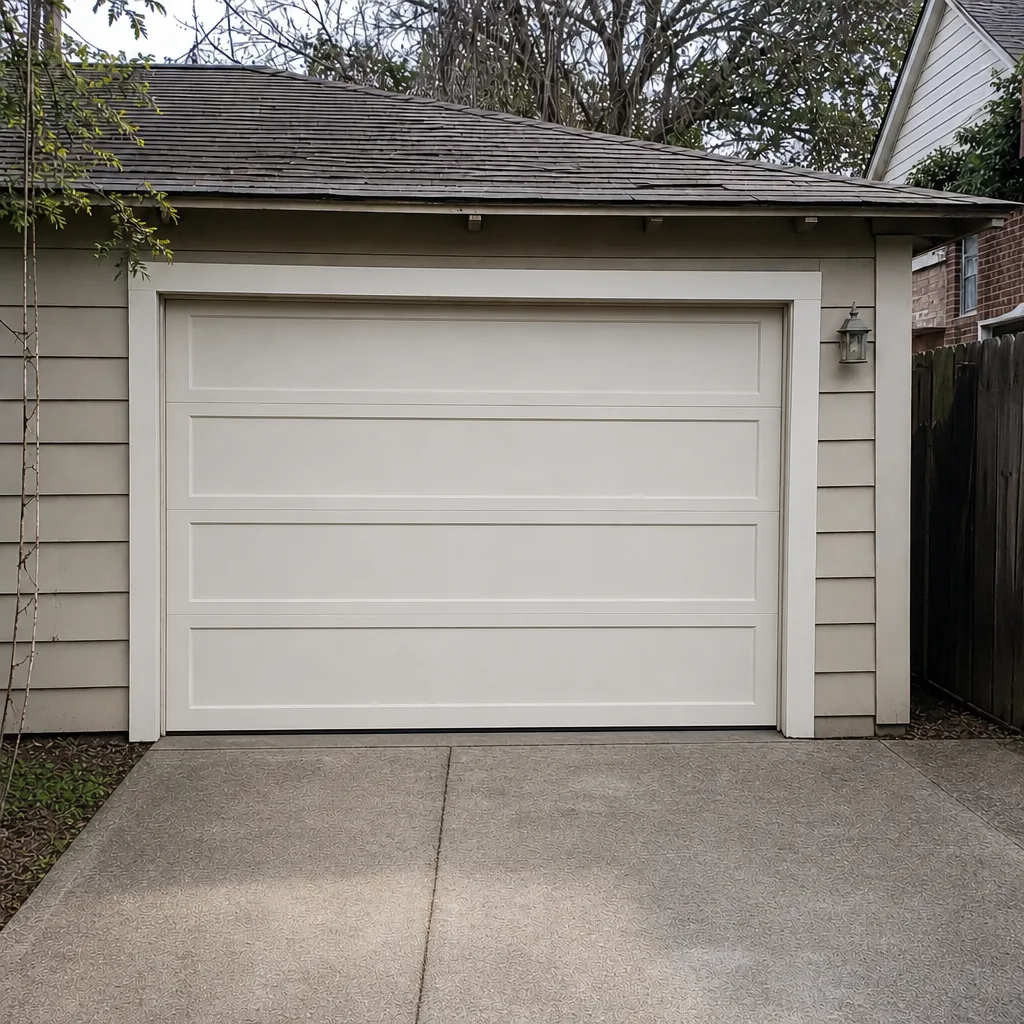 After
When to Call a Professional
Some symptoms are maintenance. Some are a repair that needs a trained technician on site before anything worse happens. Call for: a snapped torsion or extension spring; a visible gap in either spring coil; a door that won’t open or is too heavy to lift; a snapped or visibly frayed cable; a door that’s off its track; a door that reverses before reaching the floor when the photo-eyes are aligned and the force limit hasn’t been touched; a grinding or popping noise from the opener housing; and any door with children in the household where the balance test fails. If the door has hit something and bent the panel, call as well – a bent panel is a mechanical problem, not a cosmetic one.
For all of these, the price is quoted and agreed before any work starts. Our technicians have up to 10 years of experience, and they work on garage doors exclusively – not roofing, not HVAC, not general handyman work. That focus means faster diagnosis and fewer callbacks, which is the whole point of hiring a specialist. Garage Door Repair The Heights offers free estimates in The Heights. Call (855) 784-2291. We answer 24/7. Fast dispatch from 7am to 7pm, Sunday through Friday.
Frequently Asked Questions
No. Torsion springs store enough energy to cause serious injury in a fraction of a second, and winding a new spring safely requires two winding bars, the correct wire gauge, and the right number of turns for your door’s exact weight and drum size. A slipped winding bar mid-wind is the most common cause of garage door injuries in the trade. Call (855) 784-2291 for a price – estimates are free, and the estimate is fixed before any work starts.
A single torsion spring replacement in The Heights typically runs $180-$340. If the door has two springs and one breaks, replacing the matched pair is usually recommended because they share a service life – the pair runs roughly twice the single-spring price. A written estimate sets the final price, and it’s agreed before work starts. Call (855) 784-2291 for an exact quote – estimates are free.
Lubrication, photo-eye alignment, limit adjustments, weather seal replacement, and track cleaning are all homeowner-safe. Anything touching the springs, cables, or track alignment is not. The dividing line is stored mechanical energy – if a task involves anything under tension, call a trained technician. If you’re not sure which category a task falls into, call (855) 784-2291 and we’ll tell you honestly.
Not the price you agreed to. We quote from the written estimate, and that’s the price you pay. If we discover something additional during the work, we’ll tell you about it and get your agreement before continuing – never a surprise on the invoice. Call (855) 784-2291 for an estimate that stays put.
Often, yes. Same-day service is available for repair and emergency calls, and fast dispatch runs from 7am to 7pm, Sunday through Friday. When you call, we’ll give you a realistic window, not a vague promise. Call (855) 784-2291. We answer 24/7. A call outside dispatch hours is booked into the next opening, Sunday through Friday, 7am to 7pm.
The local pro who comes to your door is licensed and insured as Texas requires. Garage doors are the only trade our technicians work in, so the person on your door isn’t a generalist learning on the job. Call (855) 784-2291 for a free estimate – we’ll confirm the credentials before booking.
The Bottom Line
The DIY-vs-pro question on a garage door comes down to one test: is the task holding stored mechanical energy? Lubrication, photo-eye alignment, and limit adjustments are yours to handle – do them yourself and save the money. Spring replacement, cable replacement, and track realignment are professional work, always, no matter how experienced you are at home repair. The honest cost comparison isn’t “DIY is cheaper” or “call a pro.” It’s “the DIY tasks save real money, and the pro tasks prevent a repair that turns into three.” We’re here in The Heights either way. Call (855) 784-2291. We answer 24/7. Fast dispatch from 7am to 7pm, Sunday through Friday.
Written by the team at Garage Door Repair The Heights.