
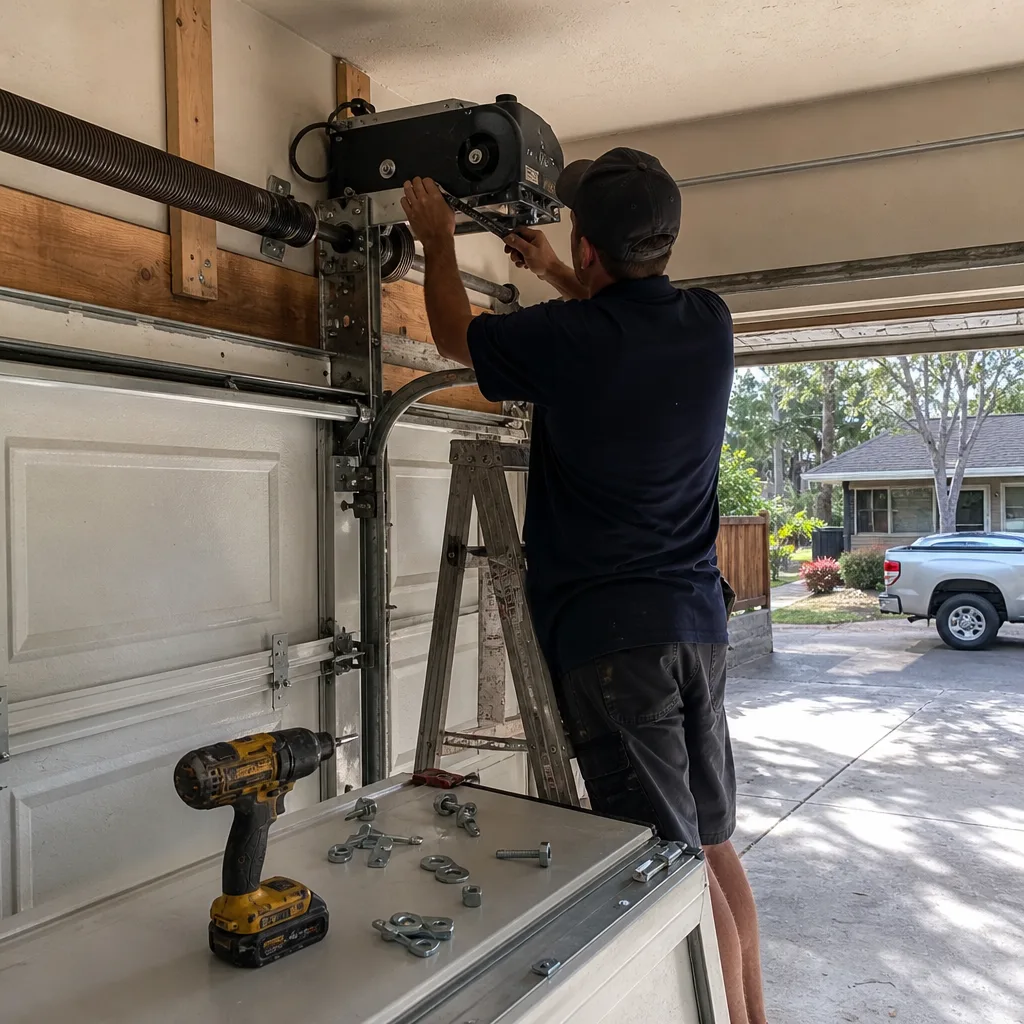
Last updated November 21, 2026
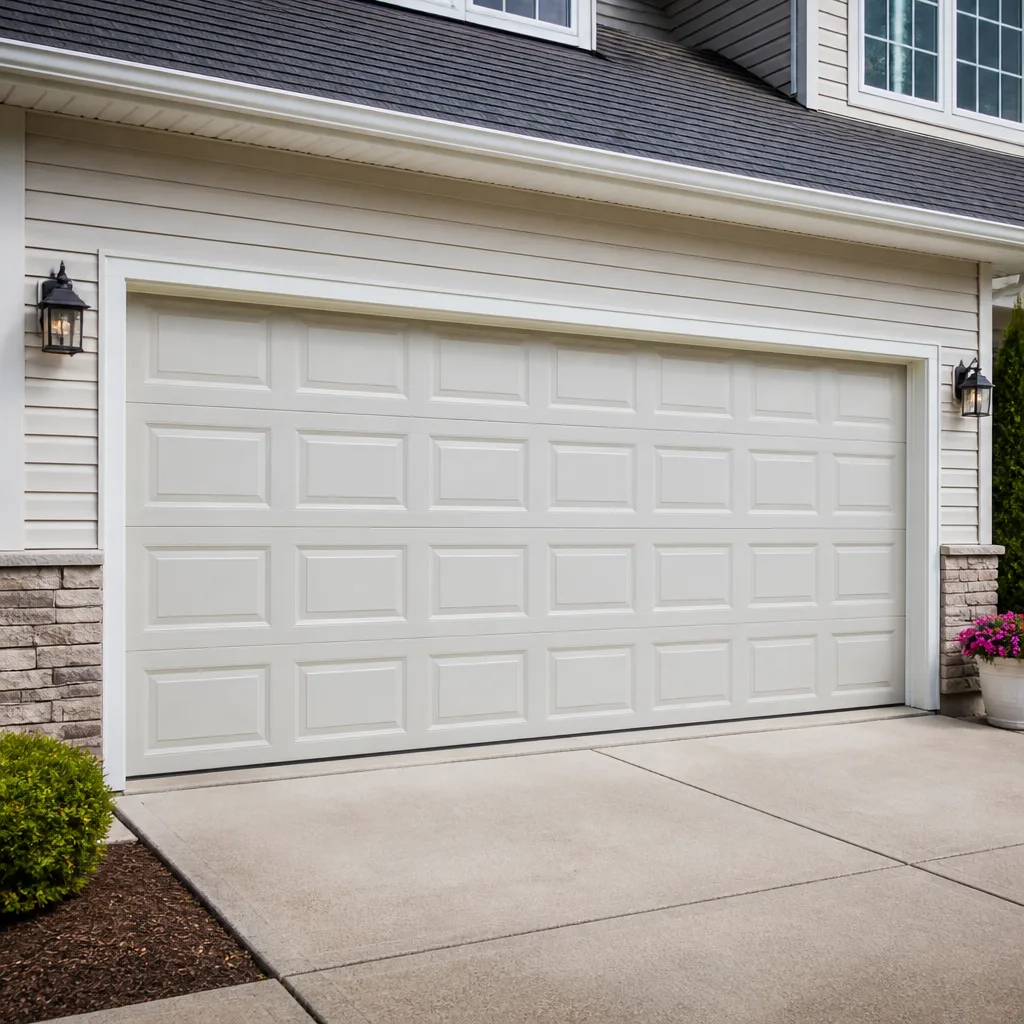 Raised-panel steel
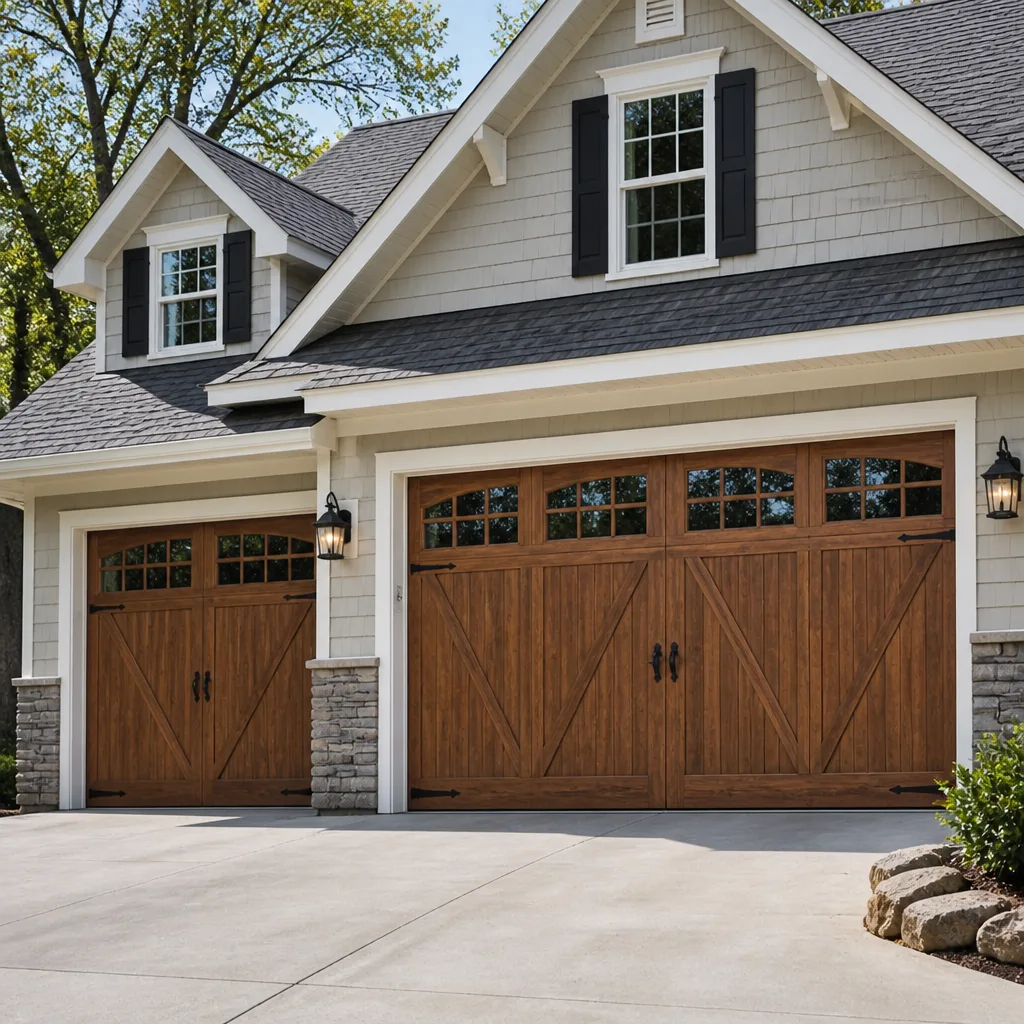 Carriage house
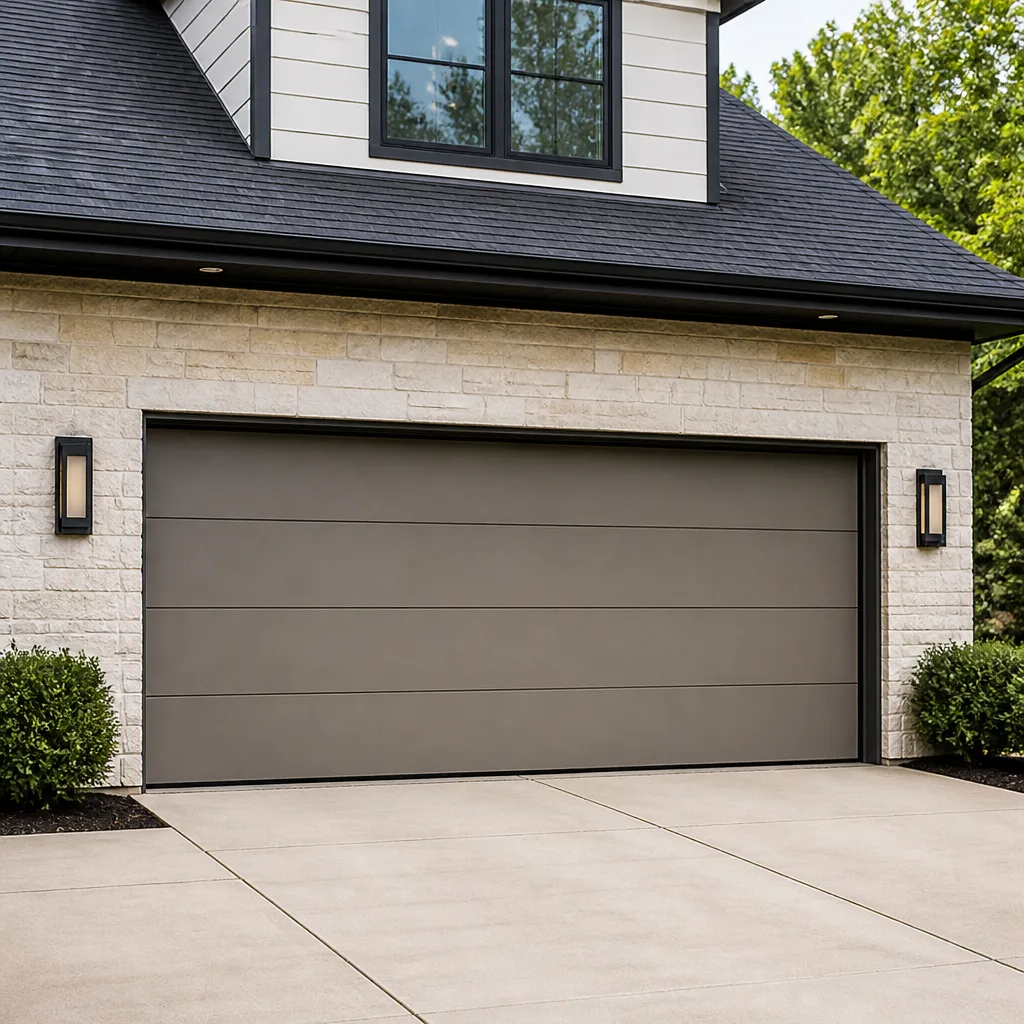 Modern flush
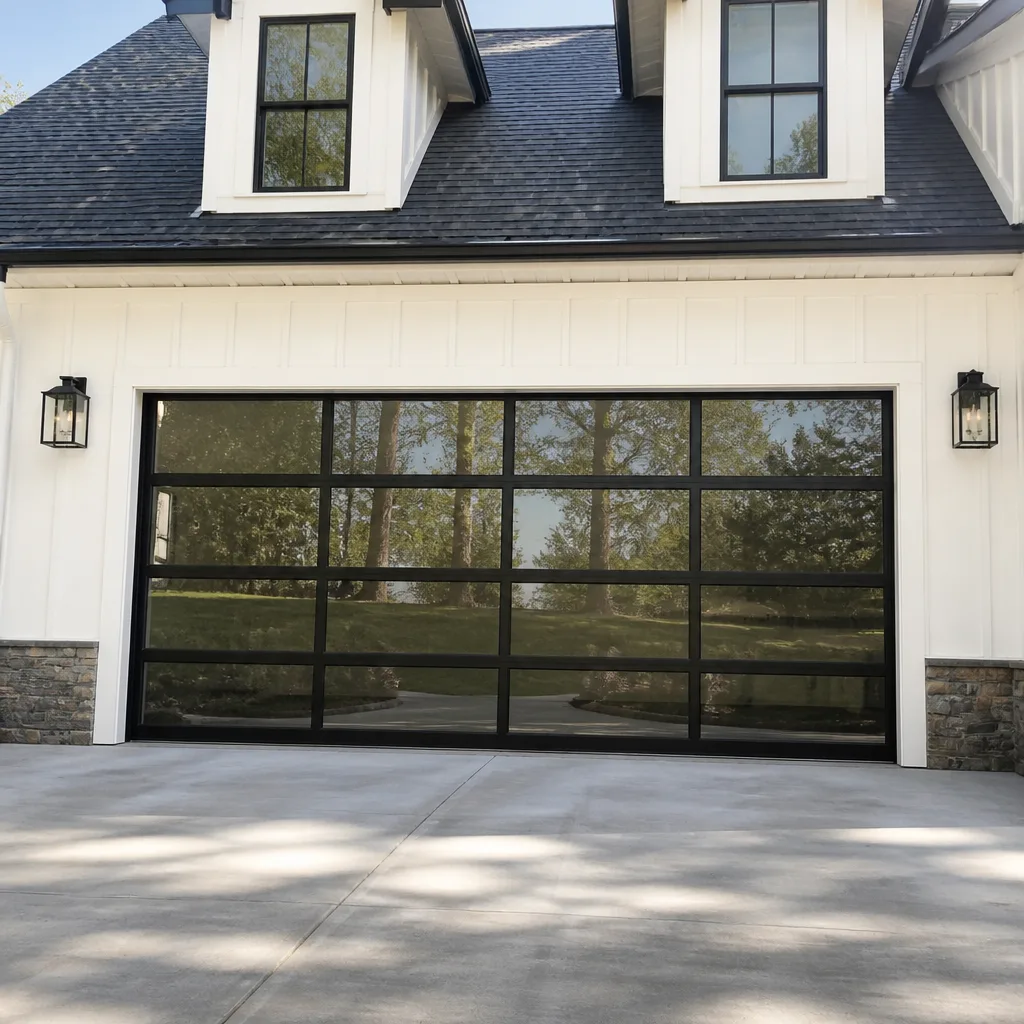 Full-view glass
 LiftMaster openers
 Chamberlain openers
Full 25-point door and opener safety check with every visit - springs, cables, rollers, tracks, and your LiftMaster or Chamberlain opener included
You get a price before we start. It does not change when the pro arrives.
Get your free estimateGarage Door Repair Maintenance Checklist for The Heights Homeowners
The biggest maintenance mistake Heights homeowners make isn’t skipping lubrication. It’s lubricating the wrong parts with the wrong product and quietly wearing out a door that was running fine. We see it constantly: a homeowner sprays a thin, water-attracting product on the torsion spring and hinge pins, the dust sticks, the rollers stop rolling, and a door that only needed a light cleaning starts pulling hard on its opener. The Heights’ mix of humid summers, warm winters, and brief freezes creates its own sequence of failures, and a maintenance list built for a dry climate will miss most of them. In this guide you’ll learn which parts go first here, the right lubricant for each one, a month-by-month task calendar tied to Houston’s real seasons, and the self-tests that tell you when you’ve crossed from maintenance into repair.
Quick Answer
A garage door maintenance checklist for The Heights should prioritize the parts that fail first in Gulf Coast humidity: bottom seals, spring coatings, cable galvanization, and hinge and roller bearings. Check the balance, auto-reverse, and photo-eye alignment every month, lubricate with a lithium- or silicone-based product (never WD-40 on springs), and clear the tracks of grit. Most older doors in The Heights need a full lubrication and adjustment twice a year, once before the humid season and once before winter.
Styles & brands we work with
- Raised-panel steel
- Carriage house
- Modern flush
- Full-view glass
- LiftMaster openers
- Chamberlain openers
Table of Contents
- What Fails First on a Garage Door in The Heights?
- Your Month-by-Month Maintenance Calendar
- The Right Lubricant for Each Component
- Three Self-Tests You Can Run Without Tools
- Seasonal Tasks Tied to Houston’s Calendar
- A 12-Point Visual Inspection Anyone Can Do
- Signs You’ve Moved From Maintenance to Repair
- When to Stop Checking and Call a Specialist
What Fails First on a Garage Door in The Heights?
Humidity, not temperature, is the main force behind garage door wear in The Heights. The parts that fail first here are the ones that trap or sit in moisture, and that’s a different order from what a homeowner in a dry city would experience.
In our experience, the sequence looks like this:
- Bottom seal and retainer. The rubber seal at the base of the door sits against a concrete slab that stays cool and damp. It hardens, cracks, then tears. This is usually the first thing to go in The Heights, and it’s also the easiest to overlook.
- Torsion spring coating. The finish on a torsion spring protects the steel underneath. In steady humidity, an uncoated or poorly coated spring starts to rust at the coils before it snaps. A rusty spring is a warning sign, not a cosmetic issue.
- Cable galvanization. Steel lift cables are galvanized, and that layer is thin. Rusted cables fray from the inside out and should be replaced before they fail, which is a job for a trained technician, never a homeowner.
- Hinge and roller bearings. Steel bearings pit when they sit in moist air, especially if they’ve never been oiled. That’s the source of a lot of the grinding and squealing noises Heights homeowners describe.
- Weatherstripping along the sides and top. Less critical than the bottom seal, but just as prone to cracking and drying out.
In a dry climate, the top of the list would look different: wood doors dry out and split, and paint fails before rubber does. The Heights’ humidity flips that order. If you’re following a maintenance list that starts with “sand and repaint your door,” you’re working the wrong end of the problem.
Your Month-by-Month Maintenance Calendar
A generic spring/fall checklist doesn’t match how a door wears in Houston. The humid season runs long here, and the freeze risk is short and concentrated. This calendar puts the work where it actually belongs.
- February: Test the balance and the auto-reverse. Winter’s brief cold snaps can stiffen grease and make a door run harder than usual. This is a good month to catch a problem before the humid season.
- March: Clean the tracks and wipe the photo-eye lenses. Spring pollen and grit collect here fast, and a dirty lens is a common false-trip cause.
- April: Lubricate rollers, hinges, and the torsion spring with the correct product. Do this before the humidity climbs, so the oil can work into the bearings before moisture does.
- May: Inspect the bottom seal for hardening or cracking. Do it before summer heat and humidity combine to finish it off.
- June: Re-check the auto-reverse and photo-eyes. Long daylight hours mean more use, and this is when a lot of The Heights doors saw the most traffic.
- July and August: Light check only. Look at the spring coating for rust, look at the cables for fraying, and listen. Skip the heavy lubrication; the heat pulls thin oil out of bearings fast anyway.
- September: The second lubrication of the year. Humidity starts easing, and it’s a good time to reset everything before winter.
- October: Test the balance again. If the door has gotten heavier to lift, the springs are losing tension.
- November: Full 12-point inspection (see below). Check the door hardware for looseness after a summer of expansion and contraction.
- December and January: Watch for the cold. On the coldest nights, grease stiffens, and that’s when a marginal spring or a worn roller reveals itself.
If you can hit the April and September lubrications plus the monthly balance test, you’ll cover about 90% of what matters here.
The Right Lubricant for Each Component
The one product to keep away from your springs is the thin, water-displacing spray sold as a general-purpose lubricant. It cleans and displaces moisture, but it doesn’t leave a lasting film. Springs, hinges, and rollers need a lubricant that stays put, not one that evaporates and leaves bare steel behind. A technician sees a can of that stuff near a garage door and knows the door’s been under-lubricated for a while.
Here’s the correct pairing:
- Torsion and extension springs: A lithium- or silicone-based grease. It stays in place and shields the steel. Lubricate the coils lightly, not the ends.
- Hinges: A light grease or lithium spray on the hinge pins. Avoid spraying the door panel itself.
- Rollers: A few drops of light oil on the bearing, not the wheel. If the roller is nylon, a light oil is usually enough. If the roller is steel, use a small amount and wipe away any excess.
- Tracks: No lubricant at all. Tracks should be clean and dry. Grease on a track collects grit and makes a door run rough.
- Bottom seal: A light application of silicone spray helps it stay flexible in The Heights humidity and slows cracking. Not oil, not grease.
Avoid the temptation to spray everything with one product. That’s the single most common thing we see go wrong in The Heights. The right product on the right part is the whole job.
Three Self-Tests You Can Run Without Tools
You don’t need a toolbox to find out whether your door is healthy. These three checks take a few minutes, and each has a clear pass/fail that tells you whether you’re fine or need a professional.
- The balance test. Disconnect the opener using the manual release, then lift the door by hand to about waist height and let go. It should stay put. If it drops or rises on its own, the springs are out of balance. A door that slams or refuses to stay is a repair call, not a maintenance one.
- The auto-reverse test. Lay a scrap of wood or a rolled-up towel flat under the closing door and run it down. The door should reverse on contact. If it presses into the object and stops, the reversal setting needs a technician. Do not try to adjust the opener settings yourself if you’re not sure what you’re doing – the force settings are safety settings.
- The photo-eye test. With the door open, stand in the path of the safety sensors and send the door down. It should stop and reverse immediately. Wipe the lenses if it fails. If it still fails after cleaning, one of the sensors is misaligned or faulty, and that’s a repair.
None of these tests requires tools, and none should be skipped. A door that fails any of them is not in maintenance territory anymore. It’s in repair territory, and it shouldn’t be operated until it’s checked.
Seasonal Tasks Tied to Houston’s Calendar
Most garage door advice is built around a northern calendar with a hard winter. The Heights doesn’t have that. The real seasons here are the long humid season, a short and mild cool season, and a few cold snaps in between.
Before the humid season (typically April): Lubricate everything that needs it. Check the bottom seal and weatherstripping. Look at the spring coating for signs of rust, and look at the cables for fraying. Clean the tracks. Test the photo-eyes.
Through the humid season (June-August): Watch the bottom seal and the spring coating. Check the tracks for grit, which builds up faster in wet weather. Listen for new noises. This is the season when rust and corrosion show up first, so this is when you should be looking at the metal.
Before the cool season (September-October): Second lubrication. Full inspection. Test the balance. Check for loose hardware. Tighten anything that’s worked loose from a summer of expansion.
During cold snaps (December-February): Keep an eye out. In The Heights, the freeze risk is short and intermittent, but it’s real. A marginal spring can fail on the coldest morning of the year, and that’s exactly when you want to know your door is in good shape.
A 12-Point Visual Inspection Anyone Can Do
Do this walk-through once a season. It takes ten minutes and it catches the majority of issues before they become repairs.
- Look at the bottom seal. Hard, cracked, or torn means replace.
- Look at the sides and top weatherstripping for cracks.
- Look at the torsion spring for rust or a visible gap in the coils.
- Look at the lift cables for fraying, rust, or kinks.
- Check that hinges are tight. Loose screws should be tightened.
- Roll each roller between your fingers. A gritty or wobbly roller is worn.
- Inspect the tracks for dents, bends, or debris.
- Check the photo-eye lenses. Wipe them clean.
- Look at the wall-mounted opener control for damage.
- Check the emergency release cord. It should hang freely and be easy to pull.
- Look at the door panels for cracks, warping, or separation from the frame.
- Check that the door sits evenly on the floor when closed.
Any single “fail” in this list is worth noting. Two or three at once means it’s time to call. Our garage door repair technicians run exactly this inspection when they arrive, but with far more precision than a homeowner can do at home.
Signs You’ve Moved From Maintenance to Repair
There’s a line between “my door needs a tune-up” and “my door needs a technician.” Crossing that line doesn’t make you a bad homeowner. It means the door has been neglected long enough that a simple cleaning pass isn’t going to fix it.
You’ve crossed into repair territory if you notice:
- The door is getting harder to lift by hand. That’s a spring losing tension, not a lubrication problem. Springs are high-tension components and should only be replaced by a trained technician. Never attempt to adjust or replace a spring yourself.
- The door is uneven or wobbling as it moves. That usually means a cable, roller, or hinge is failing. It shouldn’t be operated until it’s checked.
- The opener reverses or stops for no obvious reason. Often a photo-eye issue, sometimes a worn roller causing resistance, sometimes an opener part failing. Diagnosis needs a technician.
- You can see rust or fraying on the spring or cables. These parts are under constant tension. A rusted spring or frayed cable is a safety issue, not a cosmetic one.
- The bottom seal is torn or missing. Not an emergency, but a real repair, and the longer it stays broken the more moisture and pests get in.
- You hear a loud bang from the garage and the door won’t lift. That’s usually a broken spring. Don’t try to fix it yourself. Keep the door closed and call.
In our experience, The Heights homeowners who call at the first wobble or first bang save themselves a bigger bill than the ones who wait. A tune-up is cheaper than a spring replacement, and a spring replacement is cheaper than a damaged door panel or a bent track.
When to Stop Checking and Call a Specialist
Some jobs are maintenance. Some jobs need a technician who does garage doors all day. If you’ve found a broken spring, a frayed cable, a bent track, an opener that won’t respond, or a door that’s uneven when it closes, that’s the technician side of the line. Springs and cables are under extreme tension and can cause serious injury if handled wrong, and a bent track or a misaligned door can damage the opener if you run it anyway. Our garage door opener repair team handles the opener side, and the technicians who run it are the same ones who handle springs and cables.
If you’re looking at a full door replacement rather than a repair, that’s also a specialist call. We work on products from Clopay, Amarr, Wayne Dalton, Craftsman, and four other major brands, and our garage door installation work comes with a free measure and a written price before anything is ordered. Same for the parts. We stock and supply garage door parts directly, so a repair that would normally wait on a supplier doesn’t have to. Call (855) 784-2291 for a free estimate. We answer 24/7. Fast dispatch from 7am to 7pm, Sunday through Friday.
See the difference
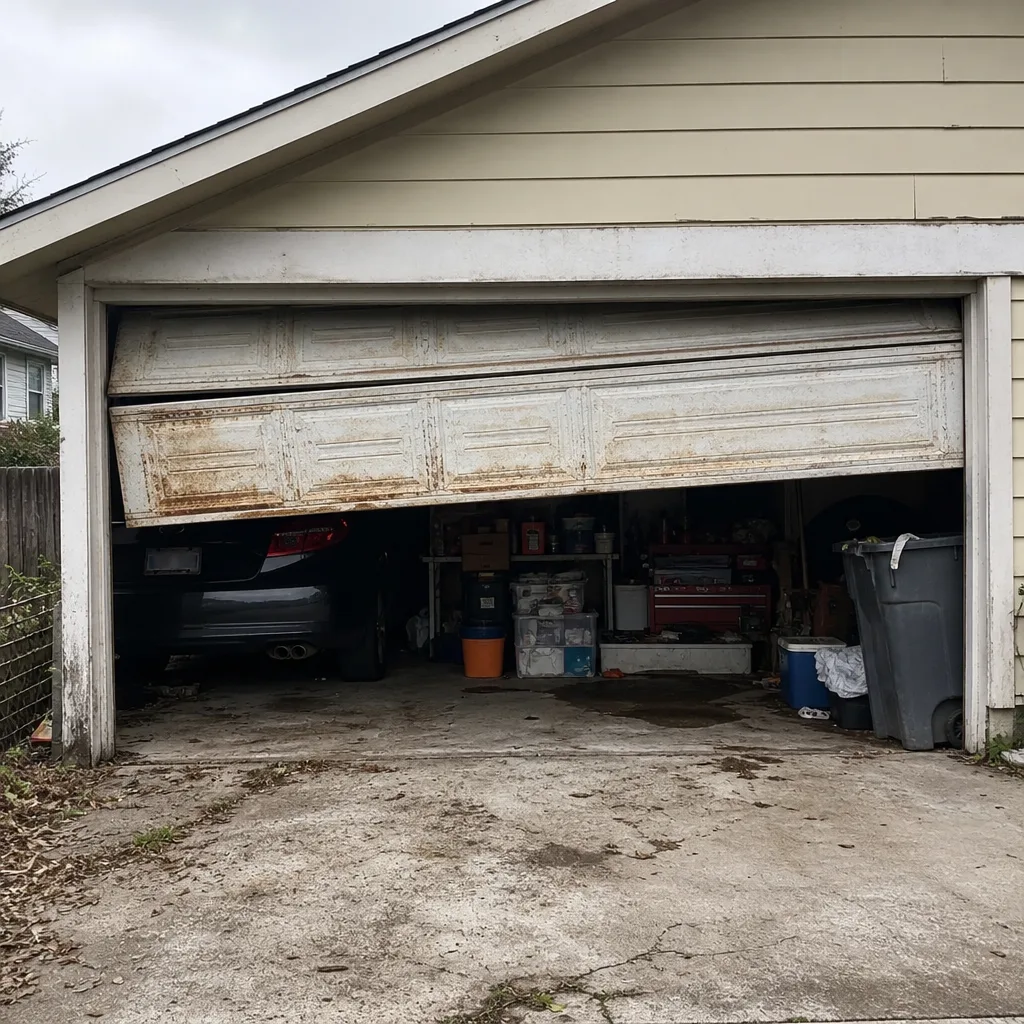 Before
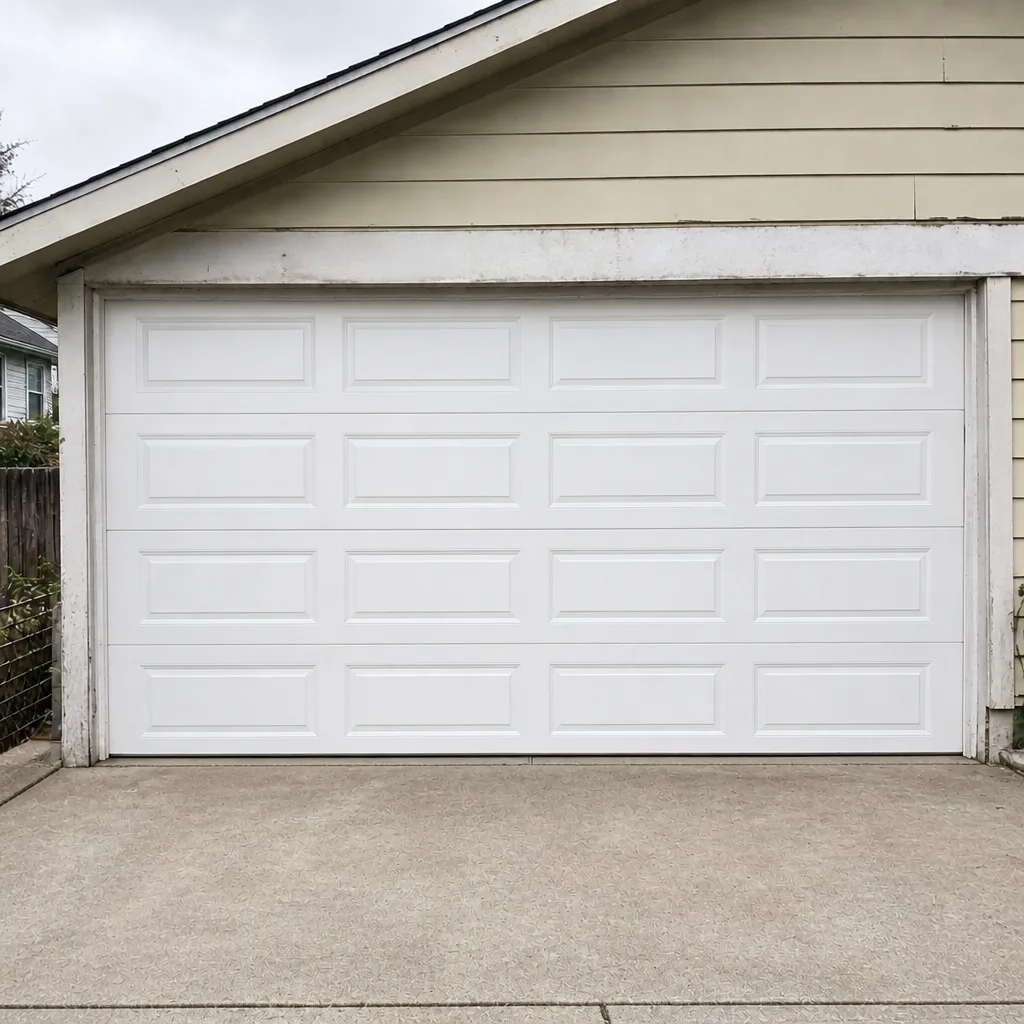 After
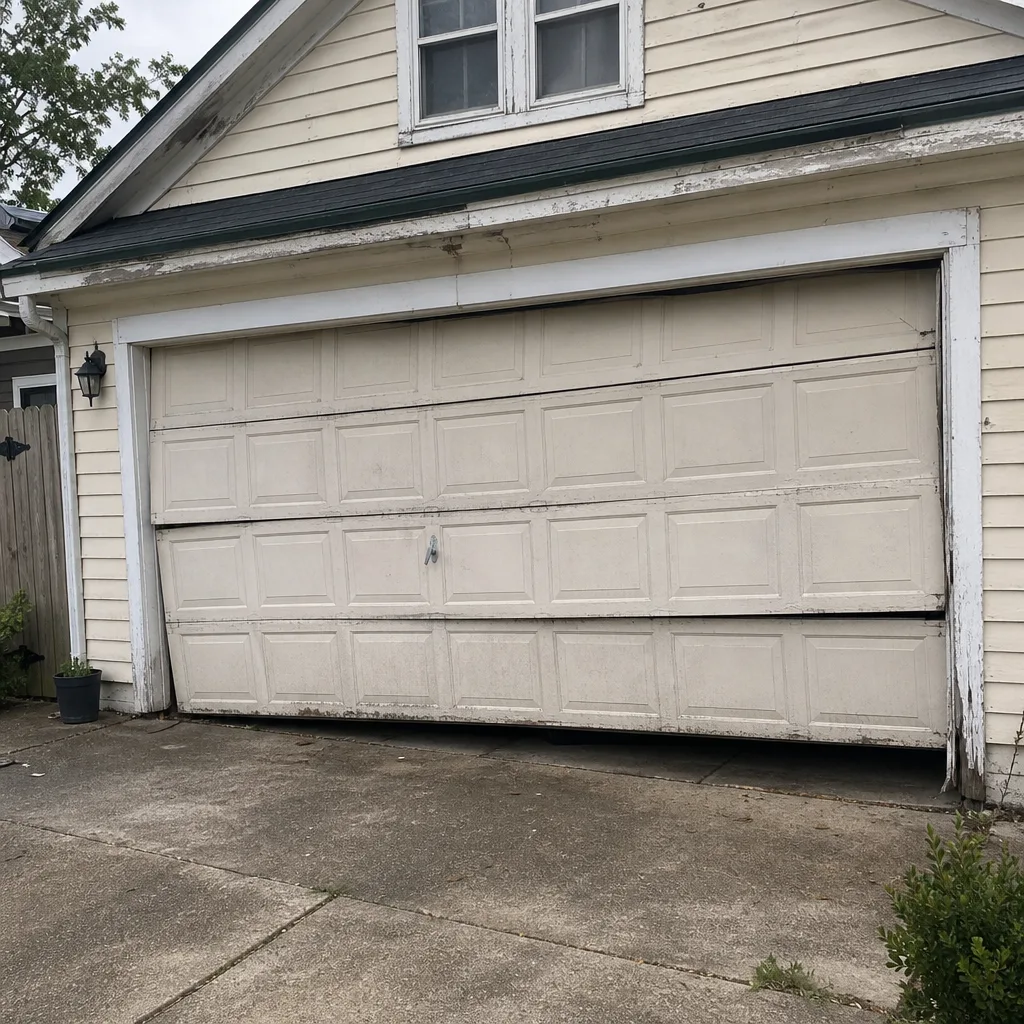 Before
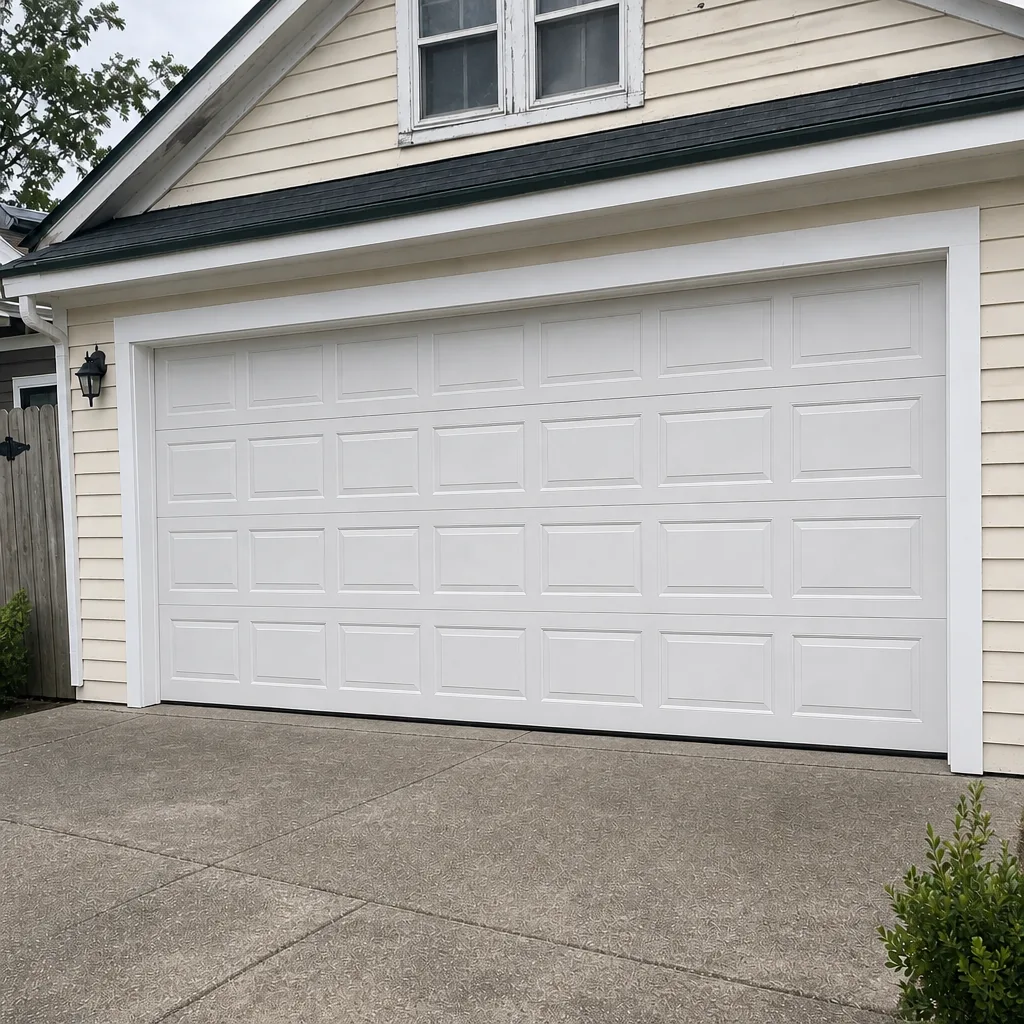 After
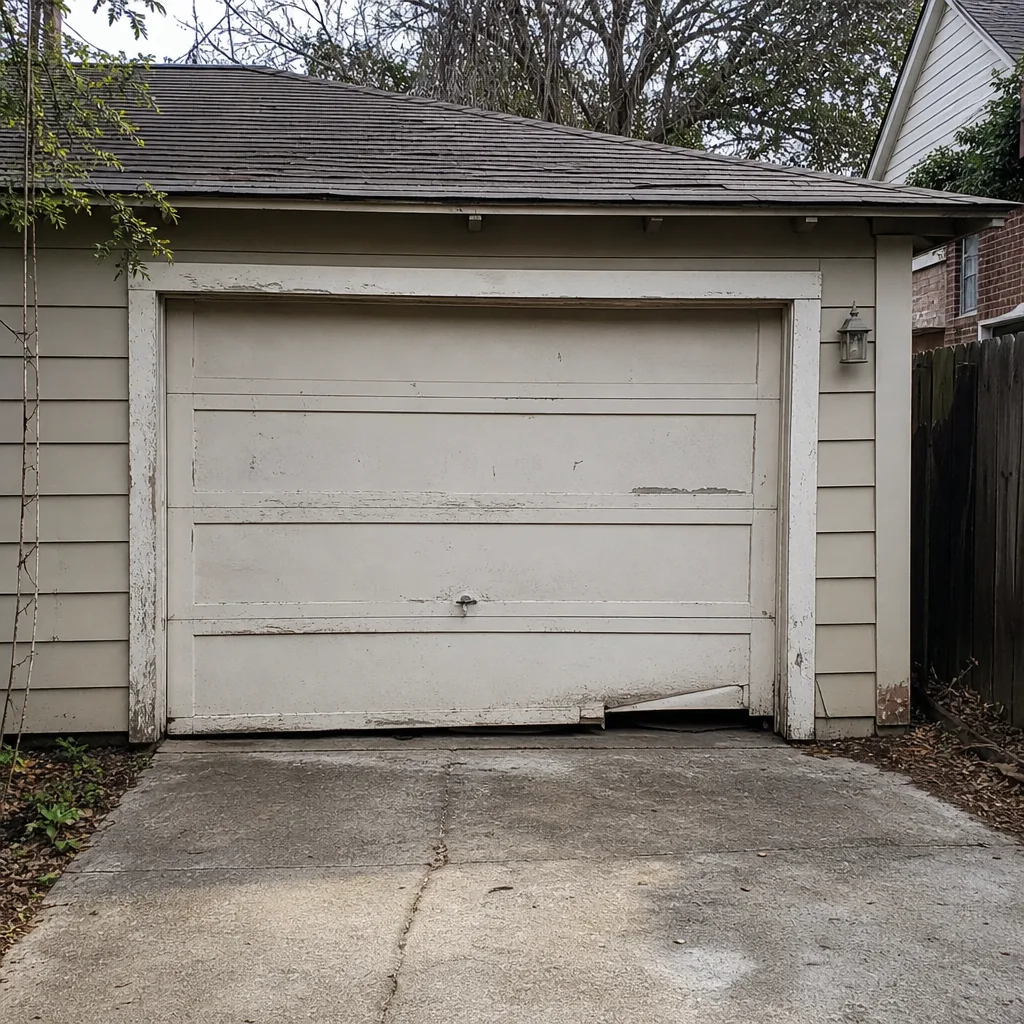 Before
 After
Common Mistakes to Avoid
- Spraying WD-40 on springs and hinges. It’s a water displacer, not a lasting lubricant. It leaves the steel dry and attracts dust. Use lithium or silicone grease instead.
- Greasing the tracks. Tracks should be clean and dry. Grease traps grit, and grit wears out rollers.
- Skipping the bottom seal. In The Heights, the bottom seal is usually the first part to fail and the easiest to ignore. It’s also one of the cheapest to replace, so it’s worth doing early.
- Adjusting the opener’s force settings to “fix” a heavy door. If the door is heavy, the springs are the problem. Turning up the force just wears the opener out faster.
- Running a door with a visible wobble. A wobbling door is usually a failing roller or cable. Running it makes the problem worse and can damage a panel or a track.
- Doing spring work yourself. Torsion springs are under extreme tension. This is the single most dangerous job on a garage door, and it should always be a trained technician’s job.
- Ignoring noise that started this month. A new noise is a signal. A noise that’s been there for months is a symptom of something that’s already failed.
Frequently Asked Questions
Twice a year is the right cadence for most doors in The Heights, once in April before the humid season and once in September before the cool season. The monthly balance test and photo-eye check are quick and catch problems between the two main tune-ups.
Use a lithium- or silicone-based grease on the springs, hinges, and rollers, and a light silicone spray on the bottom seal. Never use a thin water-displacing aerosol on springs, and never put any lubricant on the tracks.
No. Torsion and extension springs are under extreme tension, and a mistake can cause serious injury. Spring repair is the job of a trained technician, and it’s a core service at Garage Door Repair The Heights. Call (855) 784-2291 for a free estimate.
That’s usually the springs losing tension, not a lubrication issue. If the balance test fails, don’t keep operating the door. Call (855) 784-2291 to have a technician check the springs and cables.
It depends on the door and the work needed, and we set the price per job by written estimate after we see the door. The estimate is free, and the price is quoted and agreed before any work starts. Call (855) 784-2291 for an exact quote.
Run the three self-tests: balance, auto-reverse, and photo-eye. If any one of them fails, the door needs a technician, not a maintenance pass. Call (855) 784-2291 and we’ll get you on the schedule.
Most likely, yes. We work on products from eight of the most widely installed garage door and opener brands in the country, including Clopay, Amarr, Wayne Dalton, and Craftsman. If you’re not sure, call and we’ll tell you.
The Bottom Line
A maintenance checklist is only useful if it’s built for the climate the door lives in. In The Heights, that means watching the bottom seal, the spring coating, and the cable galvanization first, and treating the tracks as something to clean, not something to grease. The April and September lubrications matter more than a monthly wipe-down, and the three no-tool self-tests (balance, auto-reverse, photo-eye) will tell you more about your door’s health than any visual walk-around. Run them, hit the two big tune-ups, and you’ll spend most of your time driving in and out of a door that works. Step over the line into a broken spring, a frayed cable, or a wobbling panel and call us. Garage doors are all we do. Call (855) 784-2291 for a free estimate.
Written by the team at Garage Door Repair The Heights.