
Last updated November 21, 2026
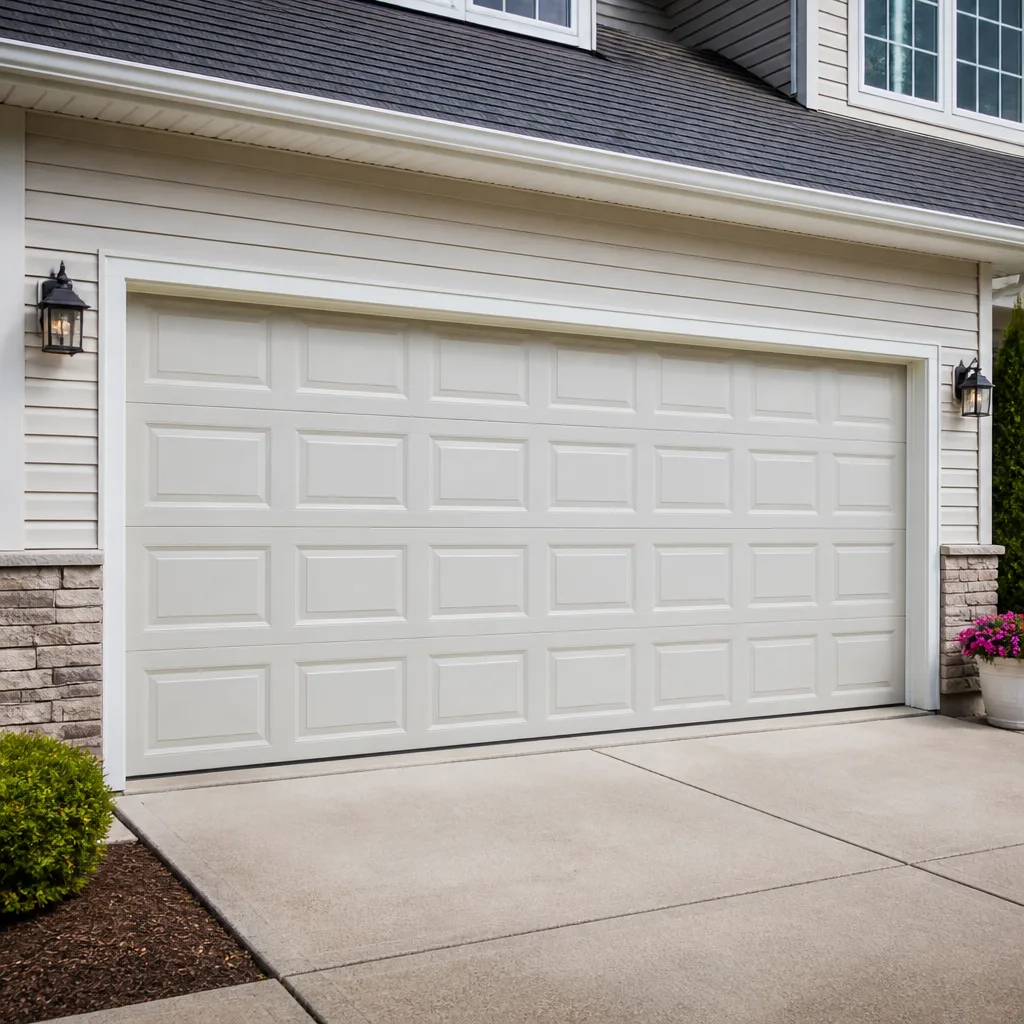 Raised-panel steel
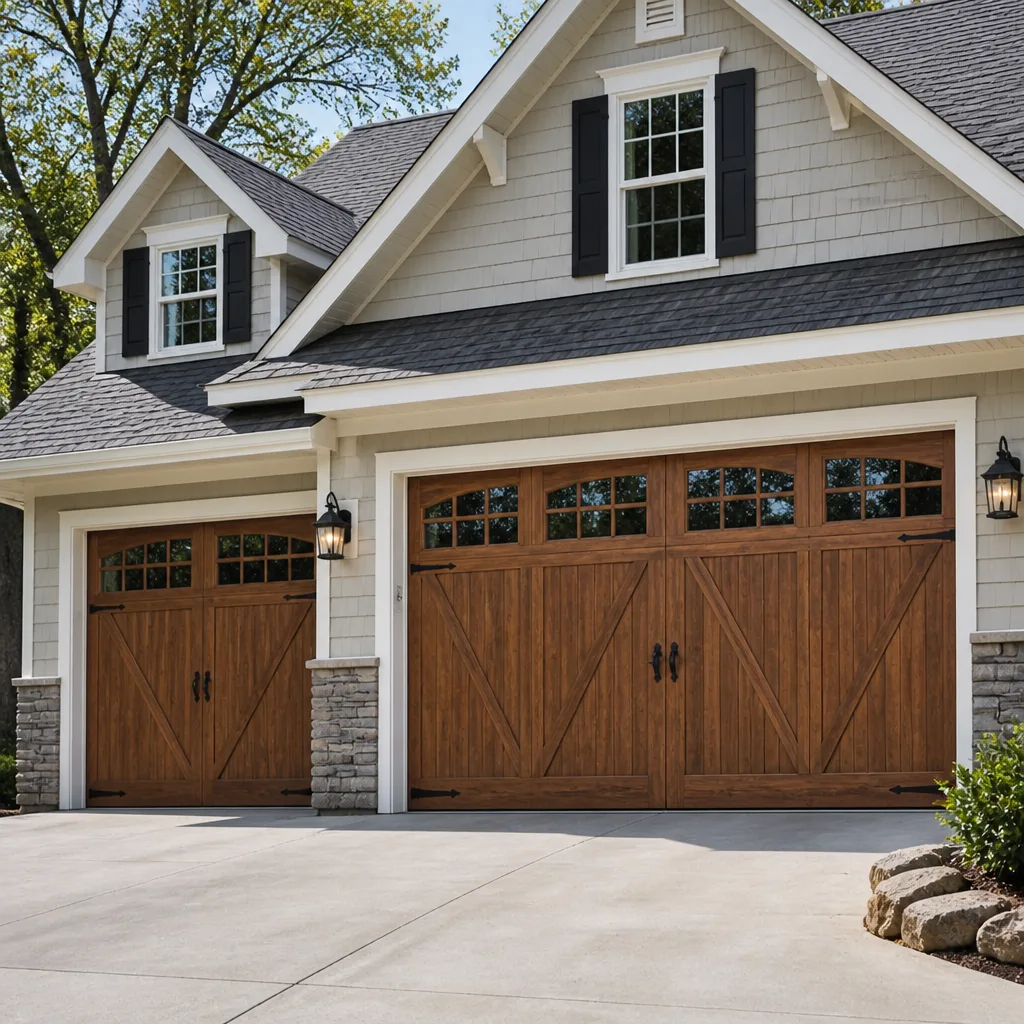 Carriage house
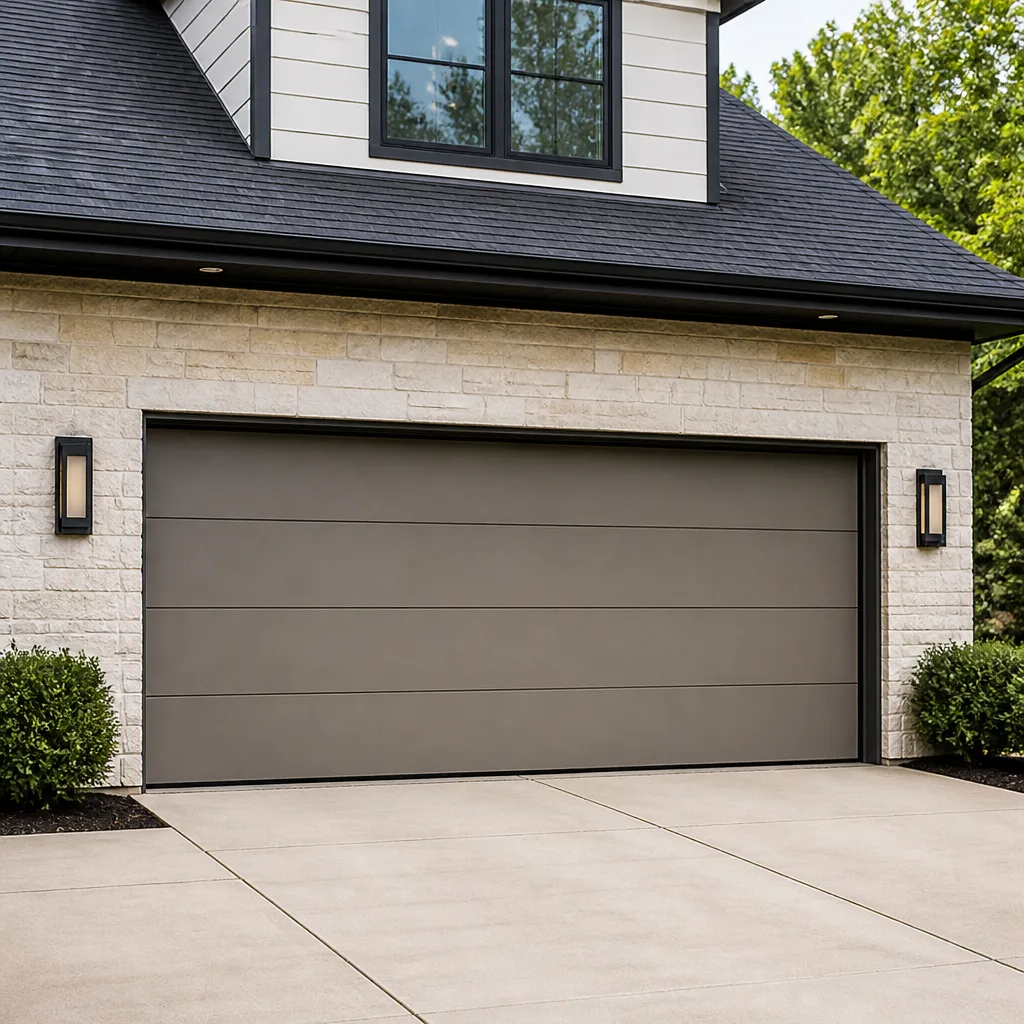 Modern flush
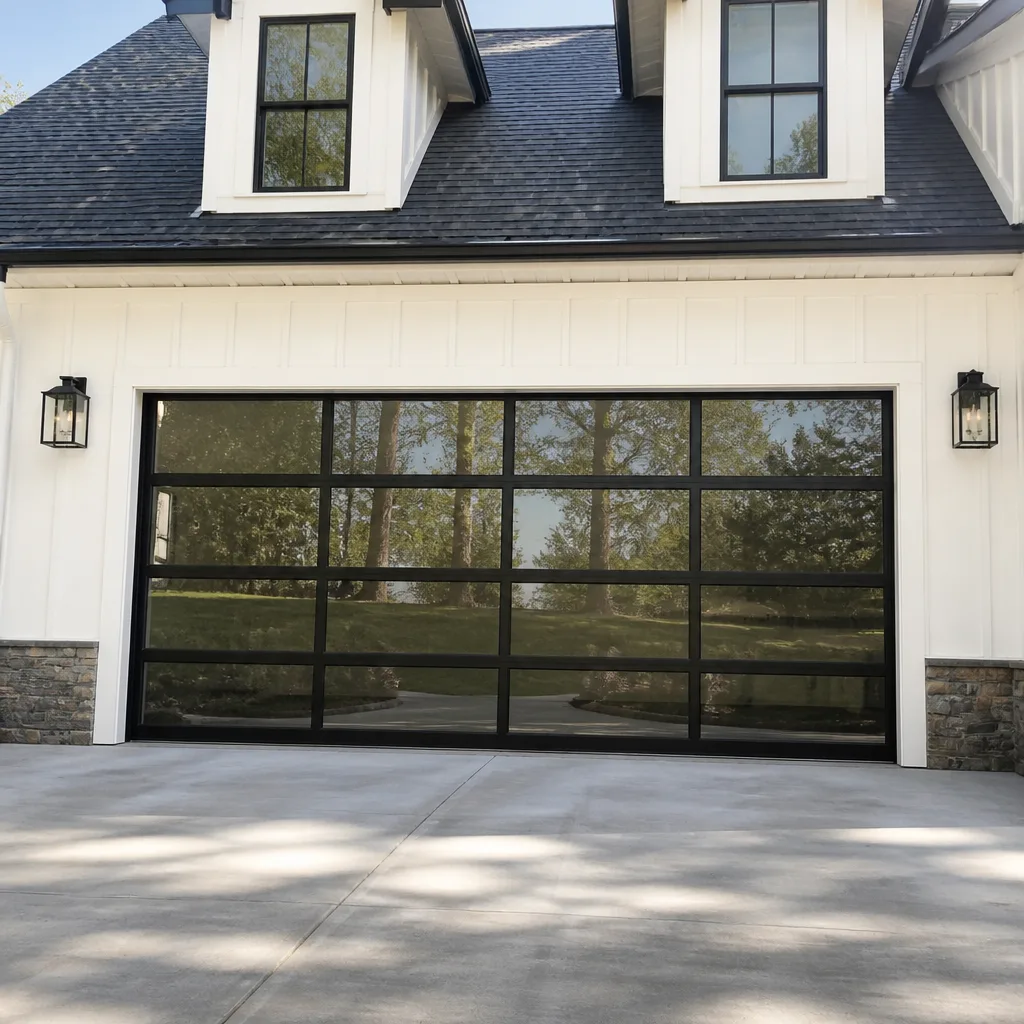 Full-view glass
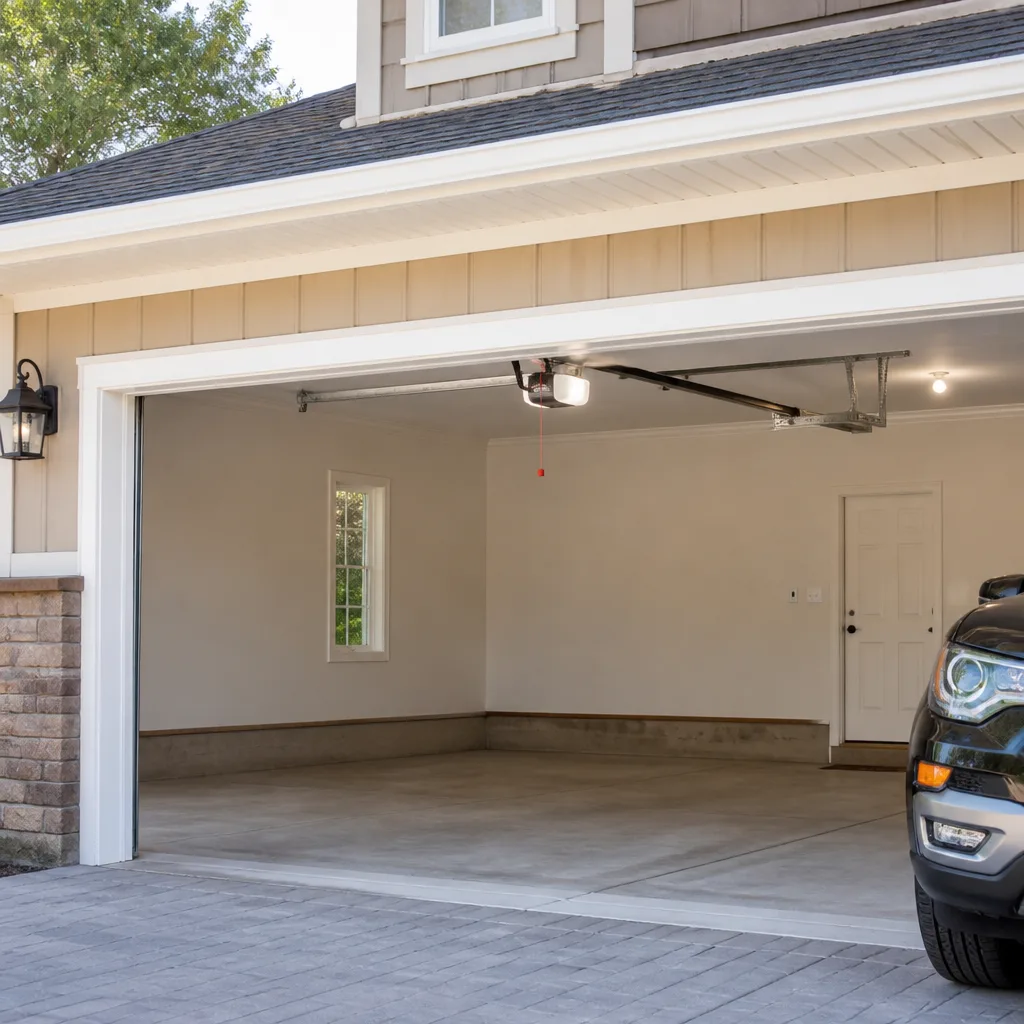 LiftMaster openers
 Chamberlain openers
Full 25-point door and opener safety check with every visit - springs, cables, rollers, tracks, and your LiftMaster or Chamberlain opener included
You get a price before we start. It does not change when the pro arrives.
Get your free estimateGarage Door Emergency Preparedness Guide for The Heights Homes
Most garage door emergencies in The Heights don’t happen during the storm. They happen the day after, when the power comes back, the rain stops, and a homeowner walks out to a door that won’t budge. The misconception is that preparedness means stocking up for the worst-case weather event. In practice, it means knowing three simple things: how to release your opener by hand, when manual operation is dangerous, and what to do in the ten minutes after something fails. This guide covers all three, plus the Houston-specific storm prep that actually matters. Read it once before you need it, and you’ll handle the next failure without panic.
Quick Answer
Garage door emergencies in The Heights usually come down to three scenarios: a broken spring with a car trapped inside, a power outage where the manual release won’t work, and a storm-damaged door that won’t close. Each has a safe first step and a step you should never take. The single most important thing to know is how to pull the manual release cord correctly – and why you shouldn’t pull it at all if a spring has already snapped. The Heights’ mild winters mean the door’s real stress comes from summer heat and hurricane-season wind, so prep should focus on those, not on freeze protection.
Styles & brands we work with
- Raised-panel steel
- Carriage house
- Modern flush
- Full-view glass
- LiftMaster openers
- Chamberlain openers
Table of Contents
- How to Manually Disengage Your Garage Door Opener Safely
- What to Do When a Spring Breaks With Your Car Inside
- Power Outage: Releasing the Door Without Spring Damage
- Securing a Storm-Damaged Door That Won’t Close
- What to Do If a Door Drops or Falls Off Track
- Pre-Storm Preparation for Houston Hurricane Season
- Same-Day Emergency vs. Scheduled Repair: How to Tell
- What to Tell the Technician Before They Arrive
How to Manually Disengage Your Garage Door Opener Safely
Manual release is the one skill every homeowner in The Heights should have before a thunderstorm knocks out power. Every automatic opener sold in the US has a release mechanism, but the type varies by brand. LiftMaster and Chamberlain units typically use a red T-handle on a cord hanging from the trolley. Genie and Craftsman openers usually use the same cord-and-handle design. Wayne Dalton openers and doors sometimes use a slightly different trolley release, and older units can have a lever-style mechanism. Find yours now, while the power is on, and confirm it moves freely.
Once you’ve located it, here’s the safe sequence:
- Stand clear of the door’s path. The door becomes dead weight the moment it’s disengaged, and any door with a fatigued spring will drop faster than you expect.
- Check that no spring looks broken. A torsion spring that has snapped shows a visible gap; an extension spring that has failed will be stretched out or hanging. If either is broken, stop – do not disengage.
- Pull the release cord straight down. You should hear a click as the trolley disengages from the carriage. On a lever-style release, move the lever to the open position.
- Lift the door by hand slowly. An intact door with working springs should lift with moderate effort. If it feels extremely heavy or won’t stay up when you let go, the springs are compromised – lower it carefully and call a technician.
- Re-engage the opener by running it. When power returns, press the wall button. The trolley reconnects automatically on most units; on some, you’ll need to pull the cord again to reset it.
What most homeowners skip: testing the release before they need it. Try it once on a calm day with the door closed. That way, when it’s 11pm and the power’s out, you’re not fumbling in the dark with a cord you’ve never pulled.
What to Do When a Spring Breaks With Your Car Inside
A broken spring with your car inside is the scenario that gets people stuck. The door won’t open, the opener motor spins uselessly, and the car in the garage isn’t going anywhere until the spring is replaced. The instinct is to disengage the opener and lift the door by hand to get the car out. That instinct is dangerous, and it’s the one thing we tell every caller in The Heights not to do.
A torsion spring or extension spring is under enormous tension, and when one fails, the door’s full weight rests on whatever cables and brackets remain. Lifting a door with a broken spring by hand puts you directly under hundreds of pounds of unbalanced load. Even professional technicians treat spring work as the highest-risk part of the trade – it’s why many general handymen refuse the job. A snapped spring can also send cable or bracket hardware flying when it goes, so inspect the door from a distance before you get close.
Here’s what to do instead:
- Leave the door closed and disengaged from the opener if the motor is still running. If the opener has a wall switch, unplug it or turn off the breaker so the motor doesn’t keep grinding.
- Do not pull the manual release if you suspect a broken spring. Disengaging puts the door’s full weight on you.
- Get the car out the other way. If there’s a side door or a second garage bay, move the car through that. If not, plan on the car staying put until the spring is replaced.
- Call a spring specialist. Spring replacement is a same-day priority for us because we know what’s at stake: a stuck car, a door that can’t secure the house, and a homeowner in an unsafe spot.
We work on Genie, Clopay, Amarr, and Wayne Dalton doors throughout The Heights, and a failed spring is the job we see most often in older homes where the original hardware is still in place. Our technicians have up to 10 years of experience identifying which spring type is required for your door’s weight and size – the wrong spring is the reason a repair comes back a few months later.
Power Outage: Releasing the Door Without Spring Damage
A power outage after a summer thunderstorm is a different situation from a broken spring. If the springs are intact, the door is safe to operate manually – and that’s exactly what the release is for. The problem is that most homeowners in The Heights have never tested it, and in the dark, with the car parked inside, it turns into a ten-minute wrestling match. Here’s the safe order of operations.
- Confirm the spring condition first. Take a phone flashlight and look at the spring bar above the door. A gap in a torsion spring or a stretched extension spring means do not proceed.
- Locate the release cord and pull it. Stand to the side, not under the door, and pull straight down. You’ll feel the trolley let go.
- Lift the door slowly. With fresh springs, the door should lift with one hand. If it doesn’t, lower it and treat the situation as a spring problem, not a power problem.
- Propping the door is not a fix. Never leave a door partway open propped with a chair or a broom. If it won’t stay up on its own, the door needs service before anyone drives out.
- Re-engage when power returns. Run the opener once without the door attached; the trolley reconnects on most Genie and Craftsman units.
One more thing: if the opener’s battery backup is functioning, the door may open with the wall button or remote even when the house power is out. LiftMaster and Chamberlain units with battery backup are the most common in this situation. Check the unit before you assume the door is stuck.
Securing a Storm-Damaged Door That Won’t Close
A garage door that won’t close after storm damage leaves the whole house exposed, and that’s the real problem in the hours after a storm. Wind can bend panels, knock a track out of alignment, or jam debris into the door’s travel path. If the door goes up but won’t come down, or comes down but won’t seal, you need to secure the opening safely – without making the track damage worse.
Here’s how to handle it:
- Clear the doorway and check for debris. A twig, a fallen shingle, or a piece of fascia in the track is the most common reason a door won’t travel. Remove anything loose by hand.
- Look at the tracks for visible bends. A bent track should not be forced. Running the door against a bent track bends panels too, and that turns a track repair into a full door replacement.
- Do not jam the door shut with wedges against the panels. Wedging a damaged door closed puts pressure where the panels are weakest, which is exactly where they crack.
- Use a temporary brace if the door stays open. A piece of lumber cut to stand vertically between the door and the floor keeps the door from dropping, but it won’t stop wind-driven water or protect the opening. If the door can’t be operated, treat the opening as insecure and plan to have it fixed quickly.
- If the door is partially closed, leave it and call for same-day service. A door stuck between open and closed with a damaged track is a problem only a technician should move.
Storm damage is where our brand experience pays off. Whether the door is a Clopay, Amarr, or Wayne Dalton, we know the panel profiles and track styles, which means we’re diagnosing from a description rather than guessing. That matters after a Gulf storm when homeowners in The Heights are competing for repair slots.
What to Do If a Door Drops or Falls Off Track
A door that drops unexpectedly, or one that comes off its track, is a genuine safety situation – and the first minute matters. A dropped door can weigh hundreds of pounds and it can move with no warning. Before you think about fixing anything, get clear of the door’s path and make sure no one is standing under it or behind it. Do not try to push the door back onto the track by hand.
The safety sequence is short:
- Step back and keep others back. A door off track is unstable until a technician secures it, and children or pets should not be near it.
- Do not run the opener. The motor will bind against a door that’s off track and can snap cables or twist panels. Unplug the opener if you can reach the outlet safely.
- If the door is partially open and hanging, leave it. Forcing it down or up is the step that turns a track repair into a panel and cable replacement.
- Call for same-day help. Off-track doors are a priority for us because of the injury risk, and we ask you to describe the door’s position on the phone so the technician brings the correct rollers, track sections, and hardware.
One caution we give every caller in The Heights: the cables on a garage door are under tension and can injure a hand if they snap or slip. Never touch a cable, never cut one, and never try to loosen the tension yourself. A trained technician has the tools and the training to deal with that safely. That’s the boundary between what a homeowner can safely do and what belongs with a professional.
Pre-Storm Preparation for Houston Hurricane Season
Hurricane season in Houston runs from June through November, and The Heights’ older homes often have original or lightly updated garage doors – most of them not rated for wind load. The prep that actually matters before a named storm is simple, and none of it involves waiting until a storm is named to start.
Before the season, in calm weather:
- Test the manual release. Pull the cord, confirm the door lifts by hand, and re-engage the opener. Do this once so the sequence is muscle memory, not a first-time experiment in a storm.
- Inspect the springs, cables, and hinges. Look for gaps in torsion springs, stretched extension springs, frayed cables, and loose hinge screws. Anything you’re unsure about is worth a professional look before a storm.
- Check the door’s weatherstripping and bottom seal. A worn bottom seal lets wind-driven rain under the door, and replacing it is a small job that’s much harder during a storm.
- Ask your city’s building department about wind-load requirements. Most cities have their own rules on what a garage door must be rated for in a high-wind zone; ask before you buy a replacement so you’re not caught off guard.
- Know your opener’s behavior during an outage. Battery-backup openers keep working when the house power fails, which is exactly when you may need the door.
During a named storm, the goal isn’t to keep the door operating – it’s to keep the opening secure. If the door isn’t rated for wind load, there’s no safe fix in the hours before landfall that makes it wind-rated. The best preparation is done beforehand, and if your door is nearing the end of its service life, that conversation belongs well before hurricane season starts. That’s when a new door makes sense, and it’s the kind of measured, scheduled work we handle through garage door installation. If you’re planning ahead for a replacement, we’ll walk you through brand options, wind ratings, and timing so you’re not shopping in a storm.
Same-Day Emergency vs. Scheduled Repair: How to Tell
Not every door problem needs a same-day call, and knowing the difference saves you stress and keeps the urgent jobs moving. Here’s how to sort it. The situations that belong in the same-day emergency category are the ones with safety or access at stake.
- Same-day emergency: a broken spring with a car trapped inside, a door off track or hanging, a door that dropped unexpectedly, a door that won’t close and leaves the house open, a snapped cable, or an opener making a loud grinding or snapping sound with the door in motion.
- Can usually be scheduled: an opener that works but is sluggish, a remote that won’t pair, a door that reverses before hitting the floor (likely a sensor or limit-switch issue), worn rollers, a noisy door that still runs, or a bottom seal that needs replacement.
- Definitely scheduled: a new door, a new opener, or a full door system replacement. These are measured and ordered, so plan ahead rather than calling in a hurry.
If you’re unsure which category your situation falls into, call and describe it. We’ll tell you honestly what it needs. For same-day help, call garage door repair and we’ll give you a straight answer. Fast dispatch runs 7am to 7pm, Sunday through Friday, and a call outside that window gets booked into the next opening. If it’s a sluggish opener rather than a door failure, garage door opener repair is the right call. If you’re working with an older Genie, LiftMaster, or Chamberlain unit, our brand experience covers the diagnosis in one visit.
What to Tell the Technician Before They Arrive
The single biggest difference between a fast repair and a second visit is the information you give on the phone. A good technician arrives with the right spring, the right track section, and the right opener parts because they already know what they’re walking into. Here’s what to have ready.
- The exact failure. “It won’t open” is enough to start, but “the opener runs and the door doesn’t move” points at a broken spring, while “the door opens an inch and reverses” points at a sensor or limit issue.
- The door’s brand and approximate age. If you can see Clopay, Amarr, Wayne Dalton, or another manufacturer’s name on the door, say so. The brand narrows the panel and track options.
- The opener’s brand and model. LiftMaster, Chamberlain, Genie, and Craftsman units each have their own troubleshooting paths, and the model number on the label tells us which parts to bring.
- Whether the door is open, closed, or stuck partway. This tells us whether we’re dealing with a safety situation and what we need to secure the opening.
- Whether the car is inside. A trapped car changes the priority and the plan.
- Any loud noise that preceded the failure. A bang followed by a door that won’t move is usually a spring; a grind is usually the opener.
We work on garage doors all day, every day, so we can often diagnose from a description before we arrive. That’s the benefit of a single-trade specialist. We aren’t a general handyman who’ll look at it and call someone else – garage doors are all we do, which means fewer surprises when the technician reaches your driveway in The Heights.
Common Mistakes to Avoid
- Pulling the manual release when a spring is already broken. This puts the door’s full weight on the person lifting it. If you see a gap in the spring above the door, leave it alone and call.
- Trying to lift an off-track door back onto the track by hand. An off-track door is unstable, and pushing it can twist panels or snap cables. Keep clear and call for same-day help.
- Wedging a storm-damaged door closed against the panels. This puts pressure where the panels are weakest. If the door won’t close, leave it where it is and secure the opening another way.
- Running the opener against a jammed or off-track door. The motor will bind and damage the cables or panels. Unplug the opener first.
- Waiting until the storm is two hours out to prepare. Manual-release practice and hardware inspection should happen in calm weather. The Heights’ hurricane season runs June through November, so early summer is the sane window.
- Skipping the door’s brand and age when you call. The brand changes which parts the technician brings. Clopay, Amarr, Wayne Dalton, and Genie doors all have different panel and track profiles.
- Letting a noisy door keep running. A door that’s getting louder is usually signaling worn rollers, a failing spring, or a loose hinge. Those are cheap to fix and expensive to replace.
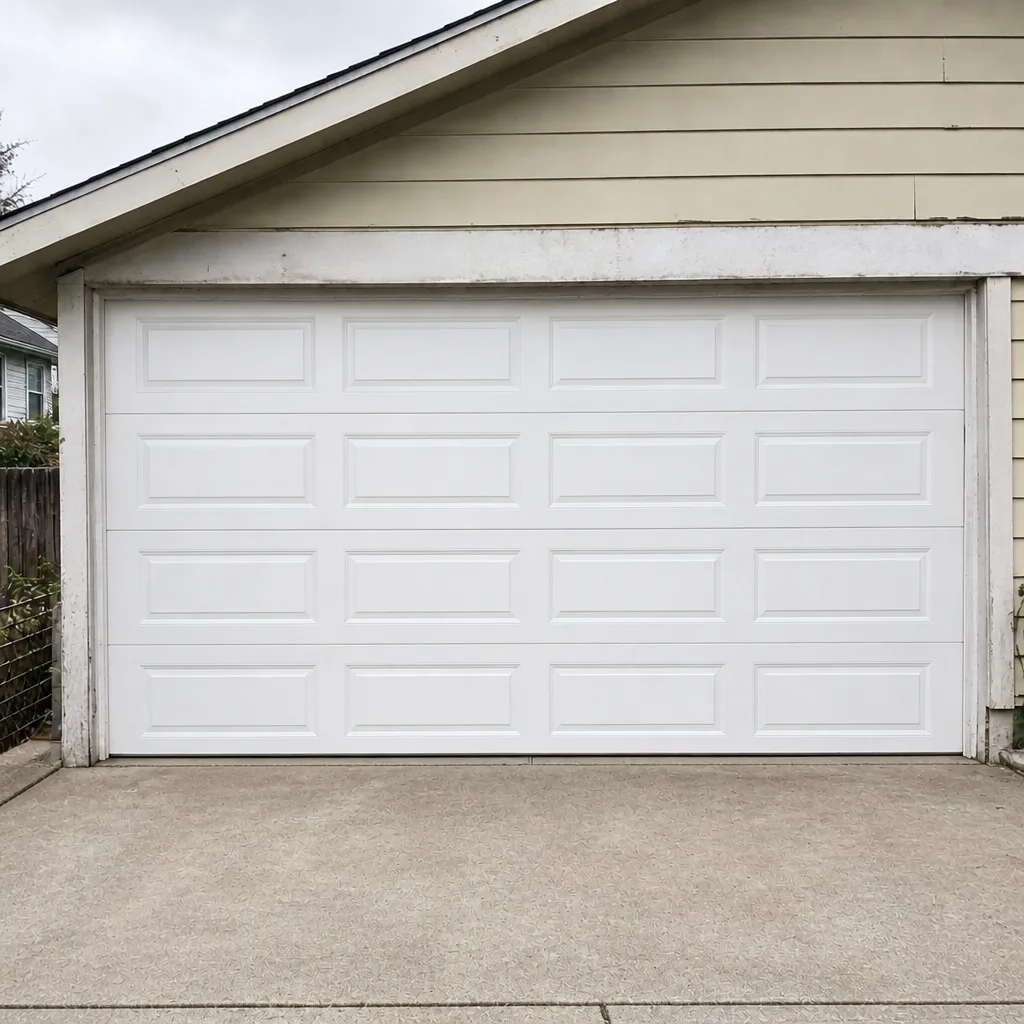
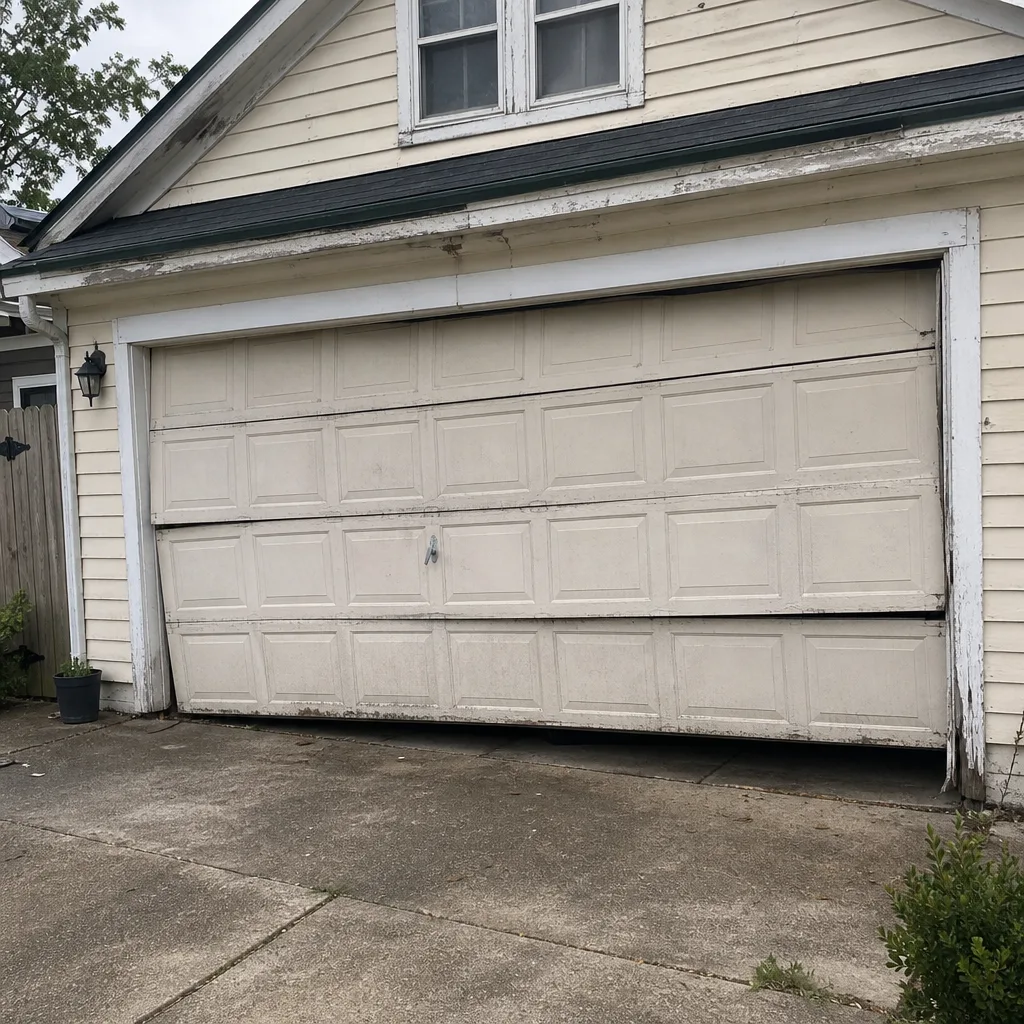
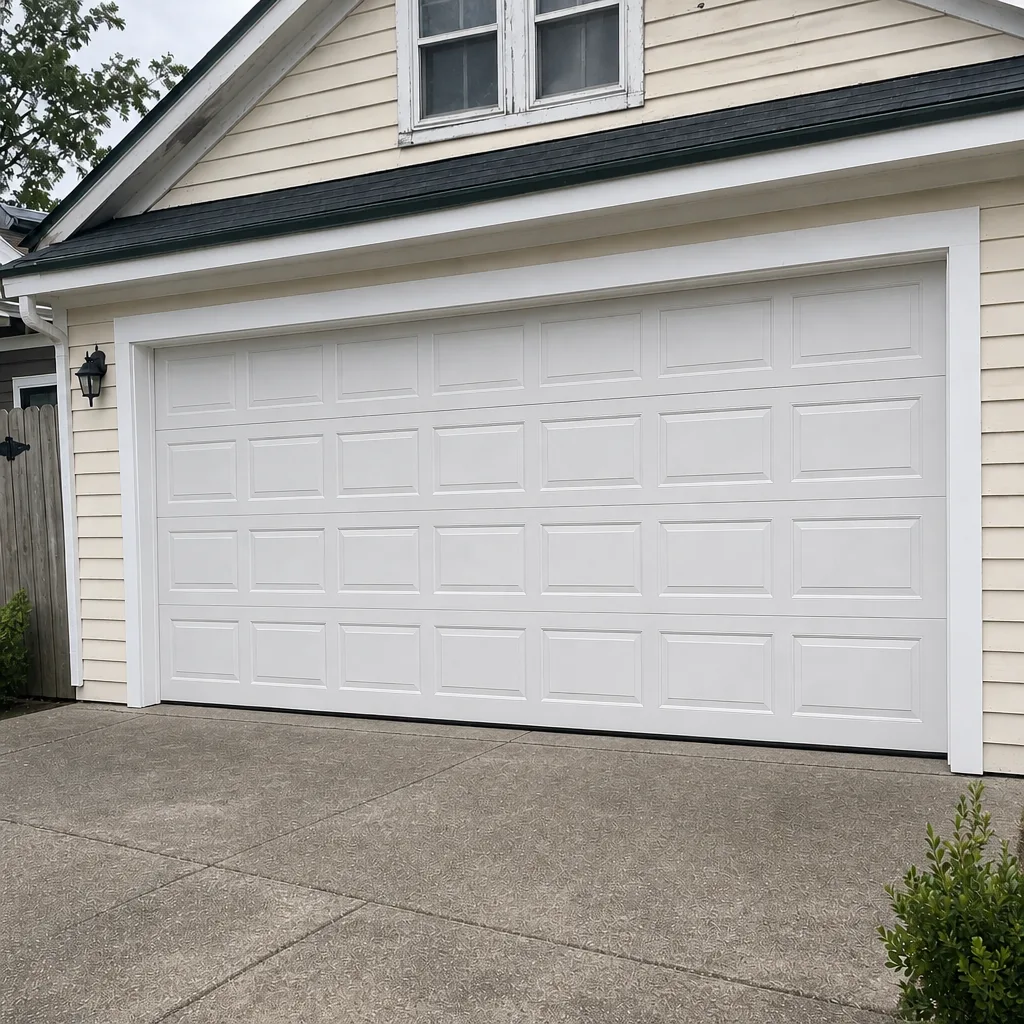
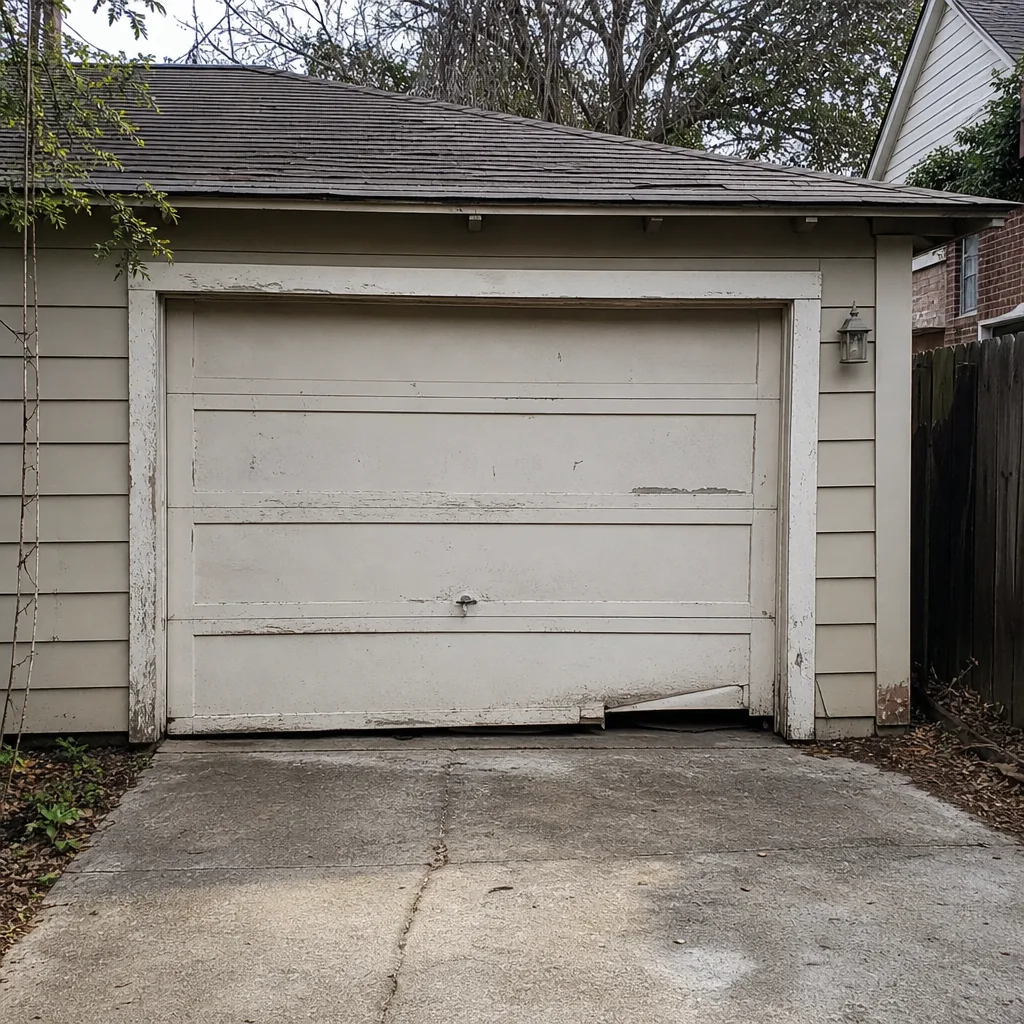
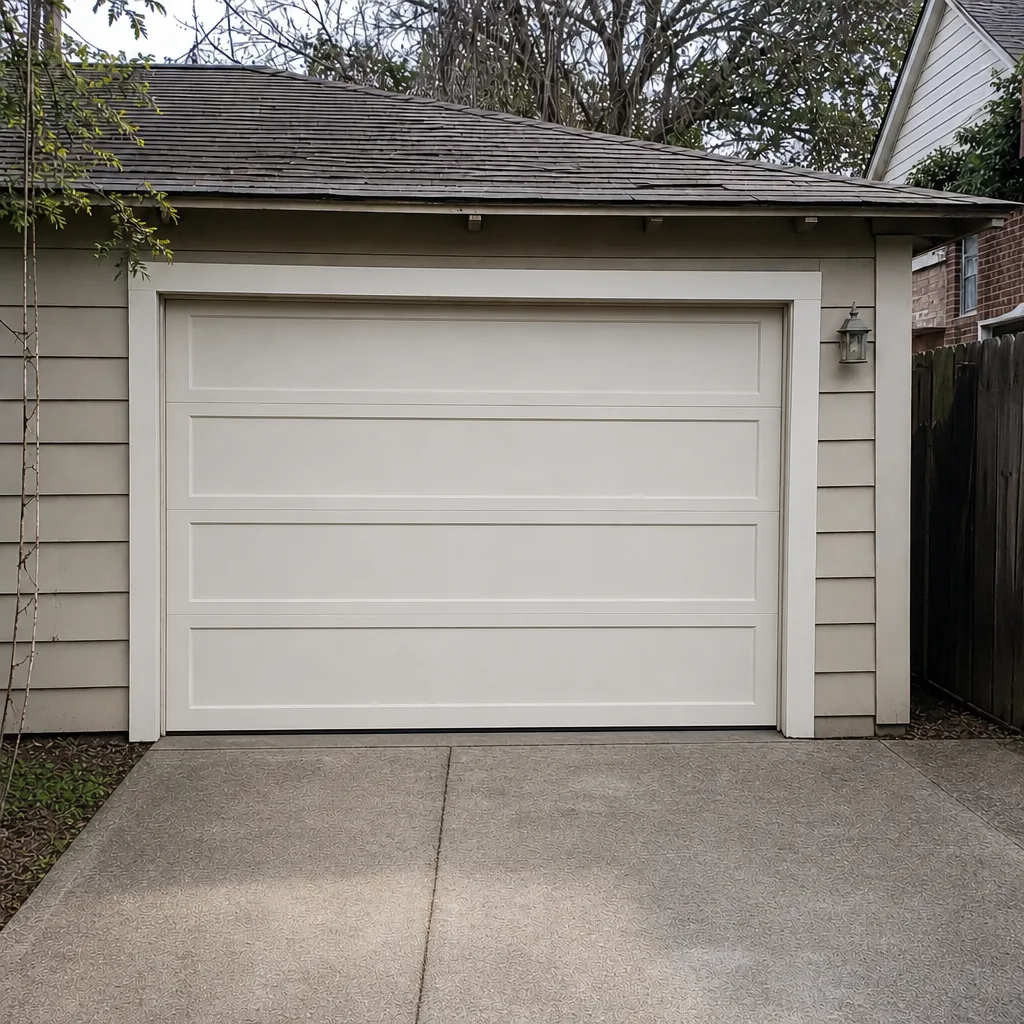
See the difference
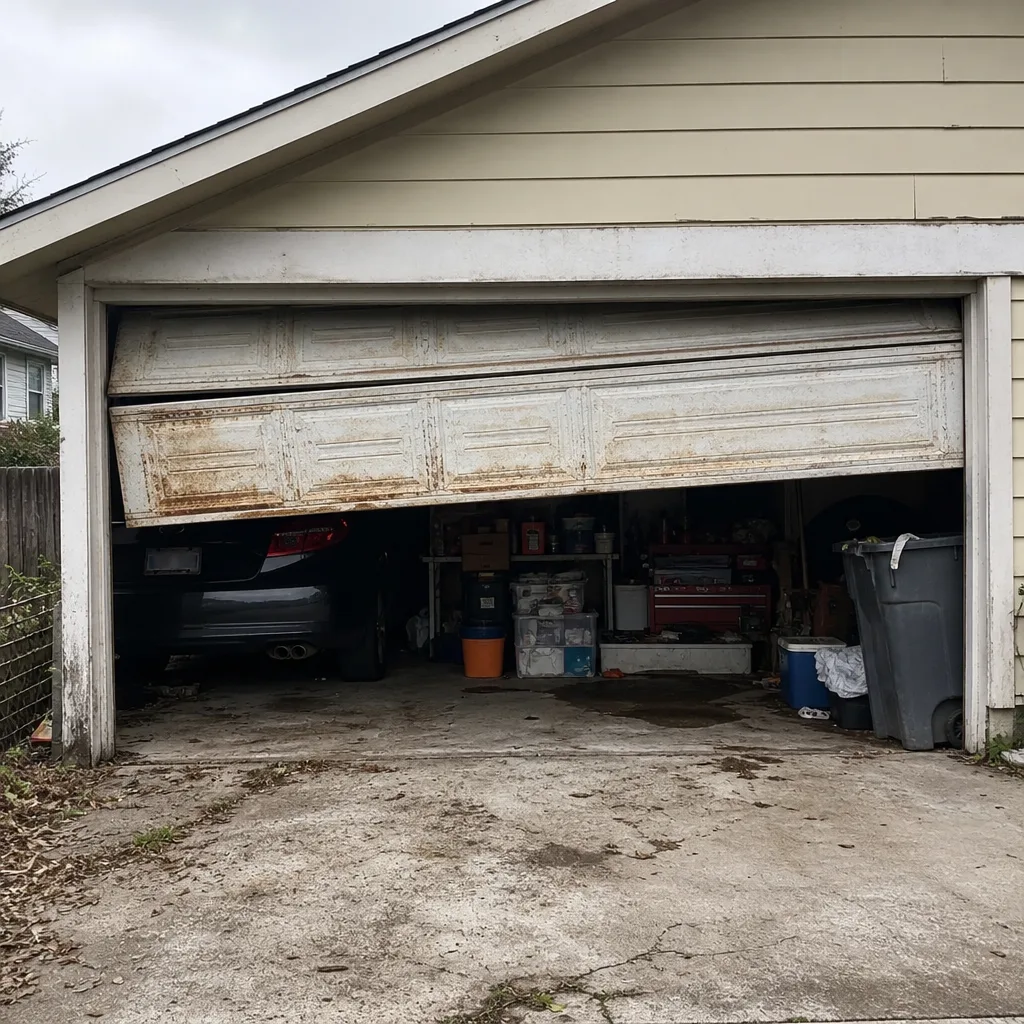 Before
 After
 Before
 After
 Before
 After
When to Call a Professional
Some garage door problems have a safe DIY answer – replacing a remote battery, re-pairing a sensor, or clearing a twig from the track. Others don’t. Call a professional when a spring is broken, a cable has snapped, a door is off track or has dropped, or an opener is making a grinding or snapping noise while the door is moving. These involve parts under significant tension, and the risk of injury is real. Spring repairs, in particular, are one of the most dangerous jobs in the trade. A door that won’t close and leaves the house exposed is also worth an immediate call. If you’re in The Heights and you’re not sure whether your situation is urgent, call and ask. Garage Door Repair The Heights offers free estimates in The Heights – call (855) 784-2291. We answer 24/7, with fast dispatch from 7am to 7pm, Sunday through Friday. The price is set by the written estimate and agreed before any work starts.
Frequently Asked Questions
Yes, if the springs are intact. Pull the manual release cord hanging from the opener’s trolley, then lift the door by hand slowly. If the door feels extremely heavy or drops when you let go, a spring is likely broken and you should not disengage the door. Call for help instead.
A broken spring is the most common acute failure we see. It typically happens with the car inside and the door stuck closed, because the opener motor can’t lift the door once the spring is gone. Storm-damaged doors that won’t close and opener failures after power outages round out the top three. Call (855) 784-2291 – estimates are free.
No. A door with a broken spring puts its full weight on the remaining hardware and on anyone lifting it. The cables and brackets can also move unexpectedly. Do not pull the release or lift the door. Leave it closed and call a technician who works on springs. Call (855) 784-2291 – estimates are free.
Clear any debris from the track first, then look for bends in the track before running the door. If the door still won’t close, leave it where it is rather than forcing it – a bent track usually becomes bent panels. Call for same-day help so the opening gets secured. Call (855) 784-2291 – estimates are free.
Yes, spring failures, off-track doors, and doors that won’t close are same-day priorities. We answer 24/7, and fast dispatch runs 7am to 7pm, Sunday through Friday. A call outside dispatch hours is booked into the next opening. Describe the door’s position on the phone so we bring the right parts. Call (855) 784-2291 – estimates are free.
A new wind-rated door is the only way to get wind-rated performance – no repair makes an older, unrated door wind-rated. Planning a replacement in calm weather is much easier than shopping during a storm. Ask your city’s building department about wind-load requirements, and call (855) 784-2291 for a free measure and written estimate.
The Bottom Line
Garage door emergency preparedness in The Heights comes down to three things you can do before a failure happens: test your manual release so you know how it feels, learn to recognize a broken spring so you don’t disengage the door and get underneath it, and understand which situations are same-day emergencies versus scheduled repairs. A storm-damaged door that won’t close needs the opening secured, not forced. An off-track door needs a technician, not a push. And if you’ve got a car trapped inside, don’t improvise – call and tell us what’s going on. We work on garage doors all day, every day, across the eight major brands, so we can diagnose from a description and arrive prepared.
For repair, opener service, or spring replacement in The Heights, Garage Door Repair The Heights offers free estimates. Call (855) 784-2291. We answer 24/7, with fast dispatch from 7am to 7pm, Sunday through Friday. The price is quoted and agreed before any work starts, and the written estimate sets the final price.
Written by the team at Garage Door Repair The Heights.